The Woolworth’s Building
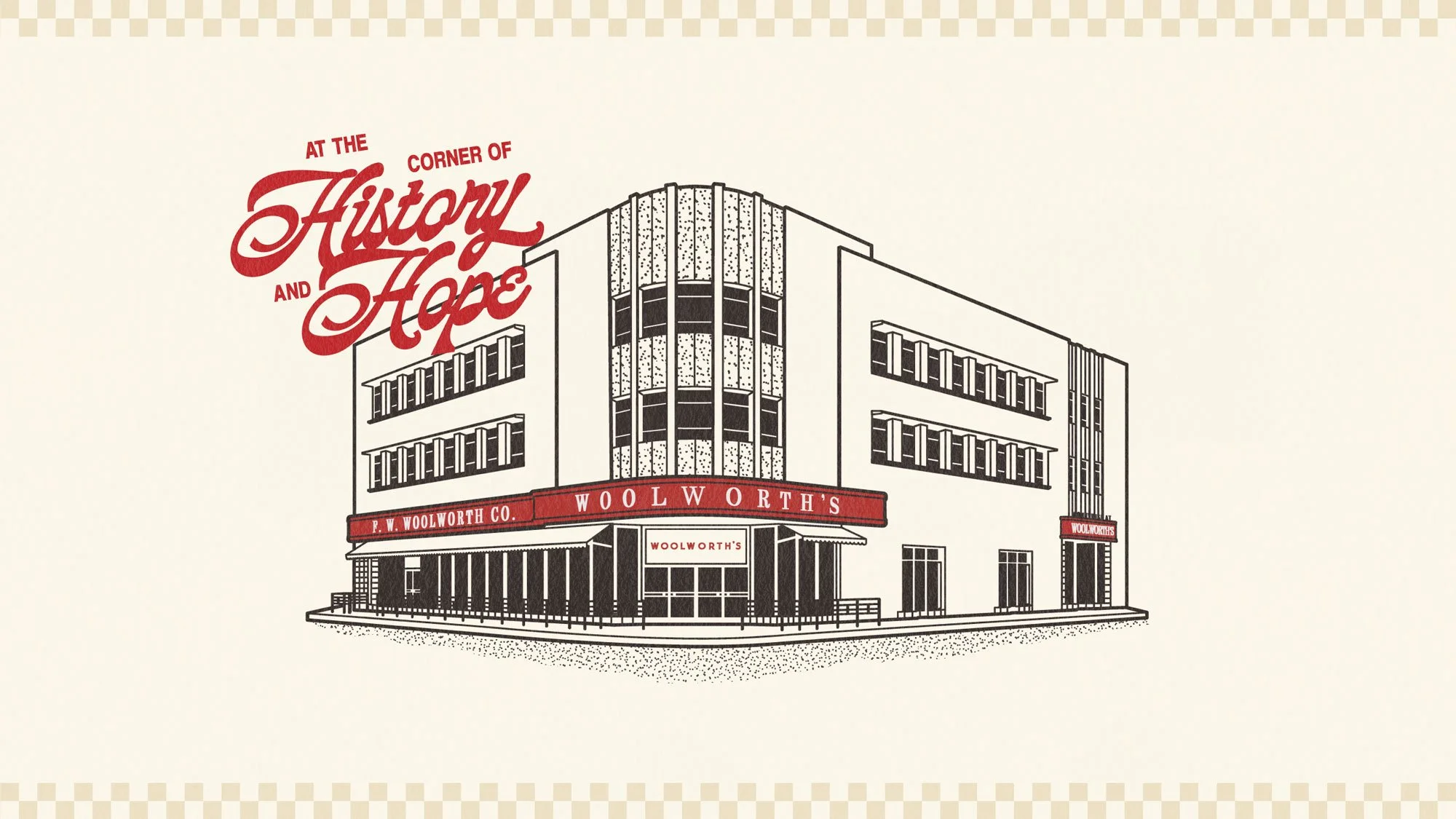
The Woolworth’s Building came to us as part of a larger effort taking shape in downtown Bakersfield. The team spoke about the building in terms of “connection.” Something that went beyond foot traffic or tenancy; a place that could bring together different parts of the city’s cultural life. The client team’s clarity of vision stood out immediately.
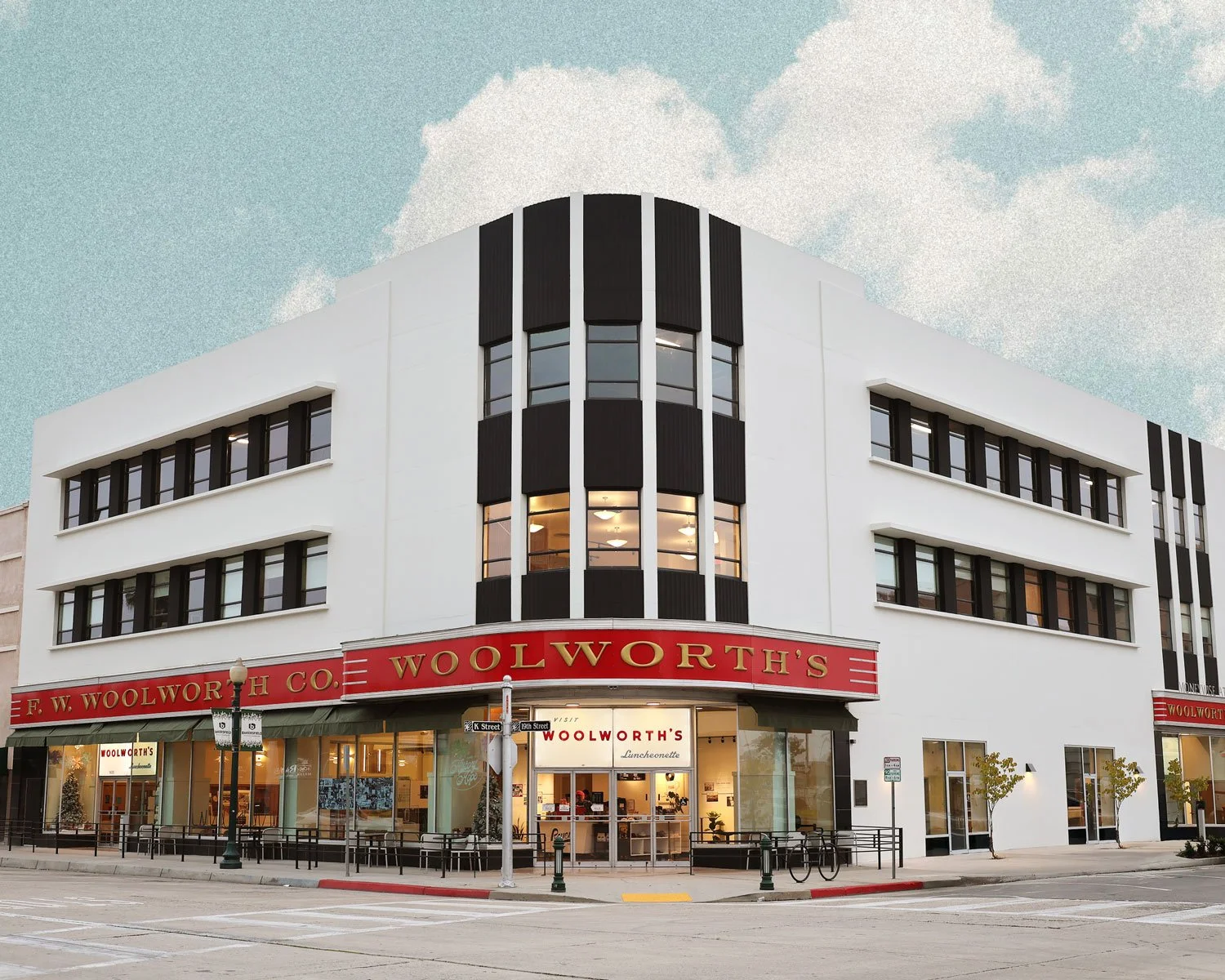
There was also a unique narrative foundation already in place. As the last surviving Woolworth’s luncheonette in the country, the building carried with it a history that extended well beyond Bakersfield. It lived squarely within a broader American story that people recognize (even if only through fragments).
From a design and brand standpoint, the opportunity was equally compelling. The team had a genuine perspective with regard to the physical space and the intended mix of uses, but the identity of the place had not yet been articulated. The question then became not what the building would contain, but how it would be understood.
Defining that particular element required something beyond simple aesthetics. We were tasked with discovering a point of view grounded in local culture and in the way people actually experience downtown. The scope covered everything from brand strategy and visual identity to website design, social media, and ongoing brand management across three interconnected entities.
Woolworth's Brand Scope:— Strategy
— Messaging
— Visual Identity Design
— Website Design
— Social Media Mangement
— Brand Management
— Brand Guidelines
— Consulting
The Woolworth’s Building Today
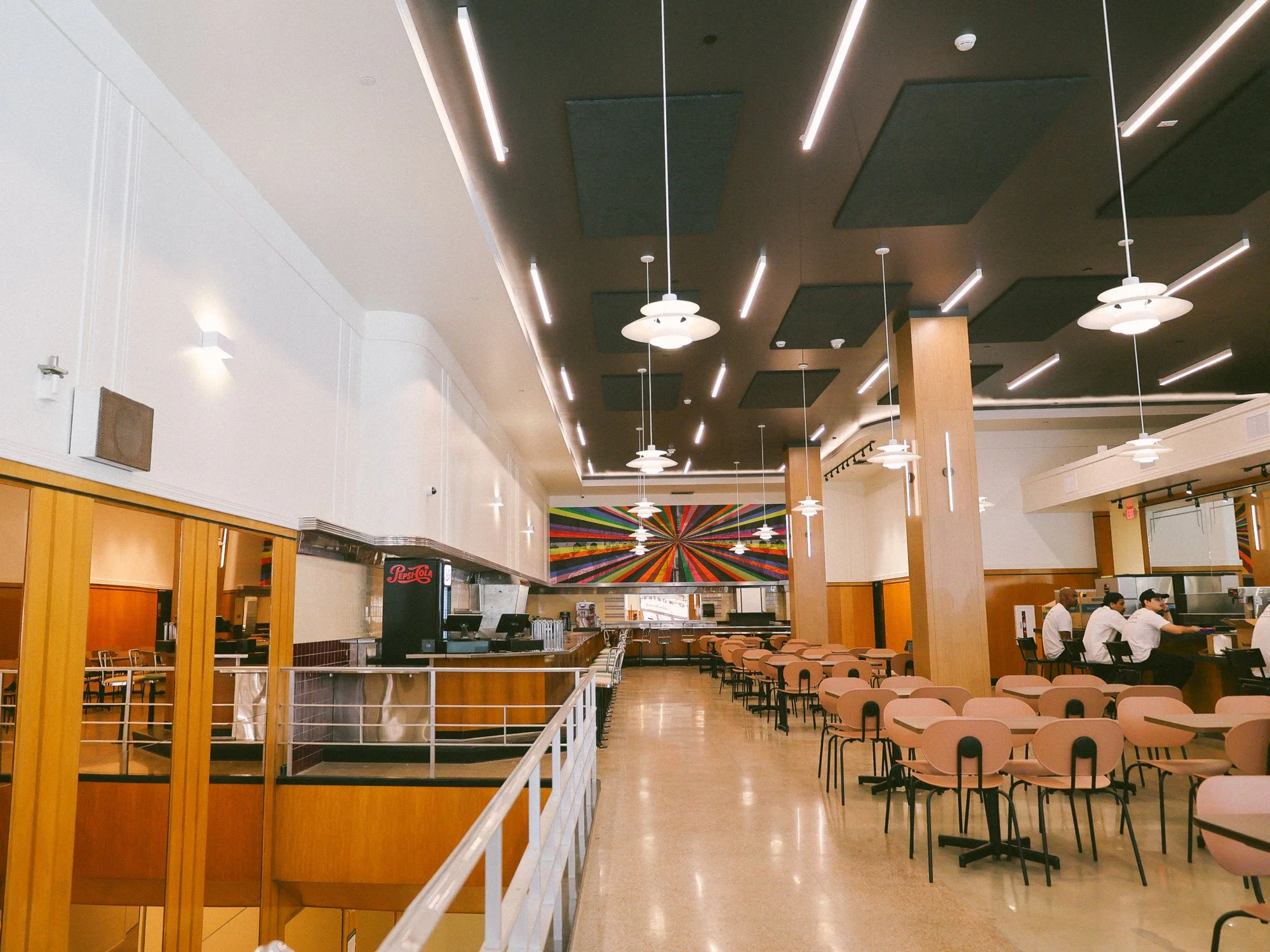
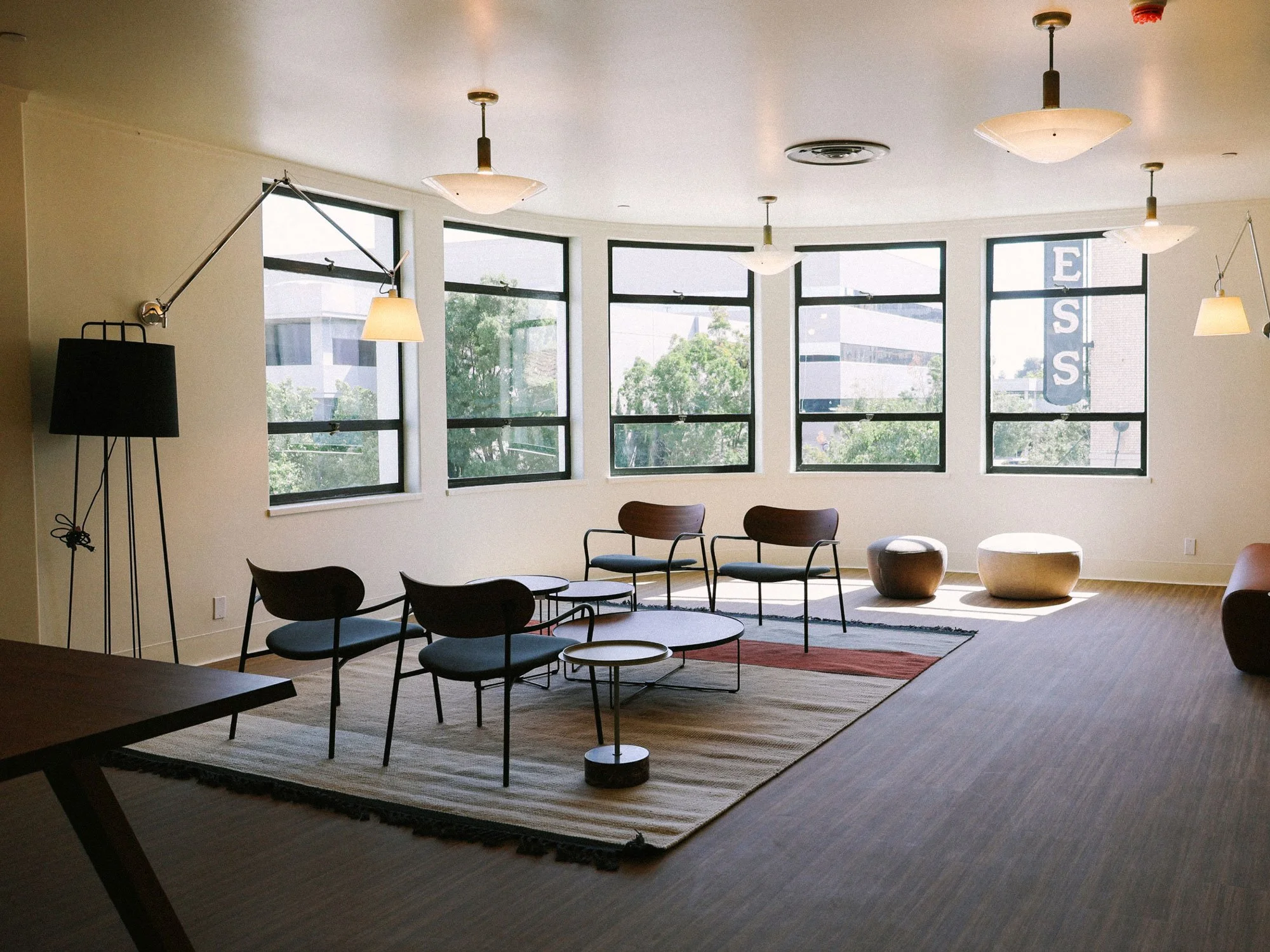
The building is now active across multiple layers.
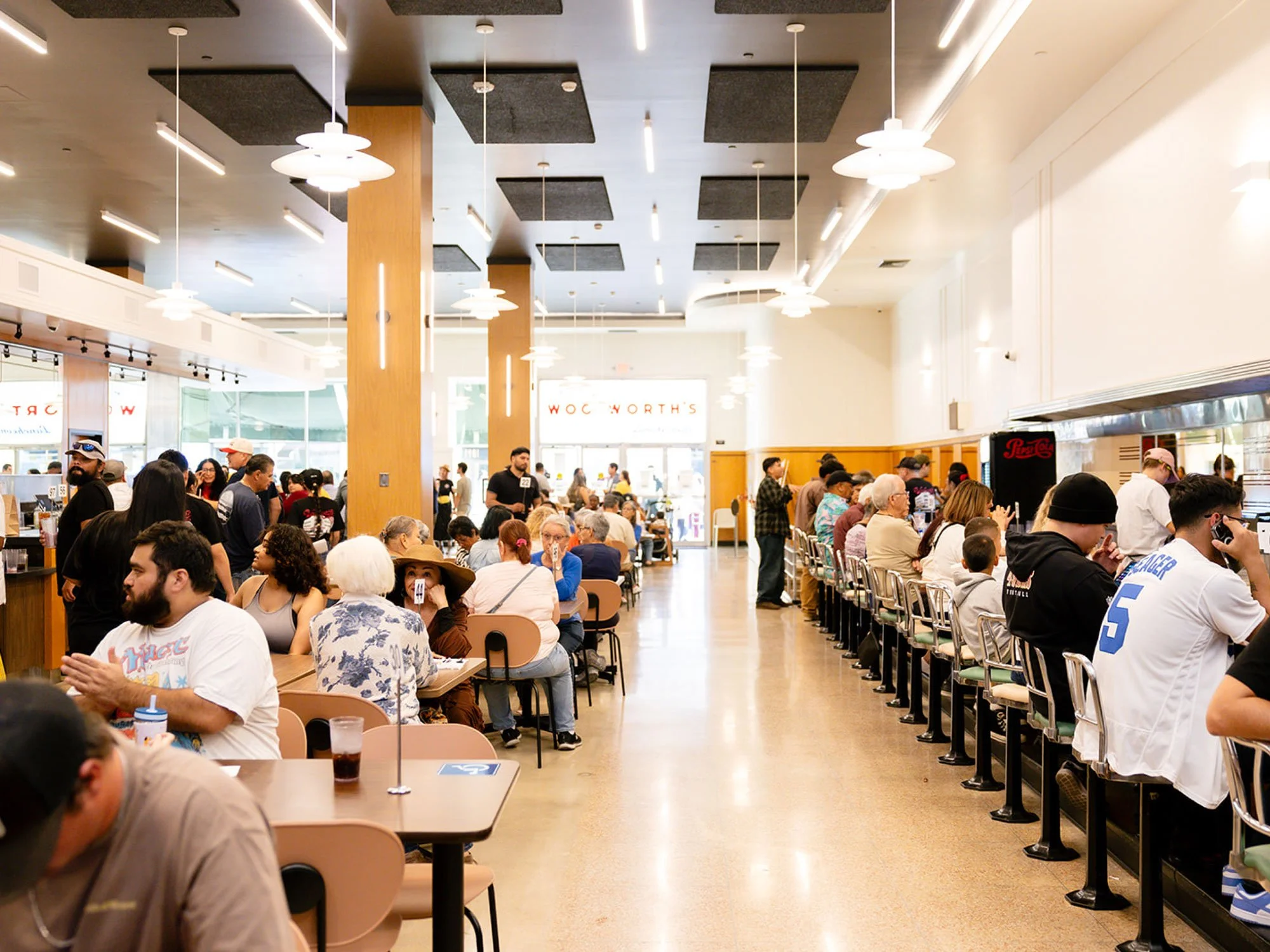
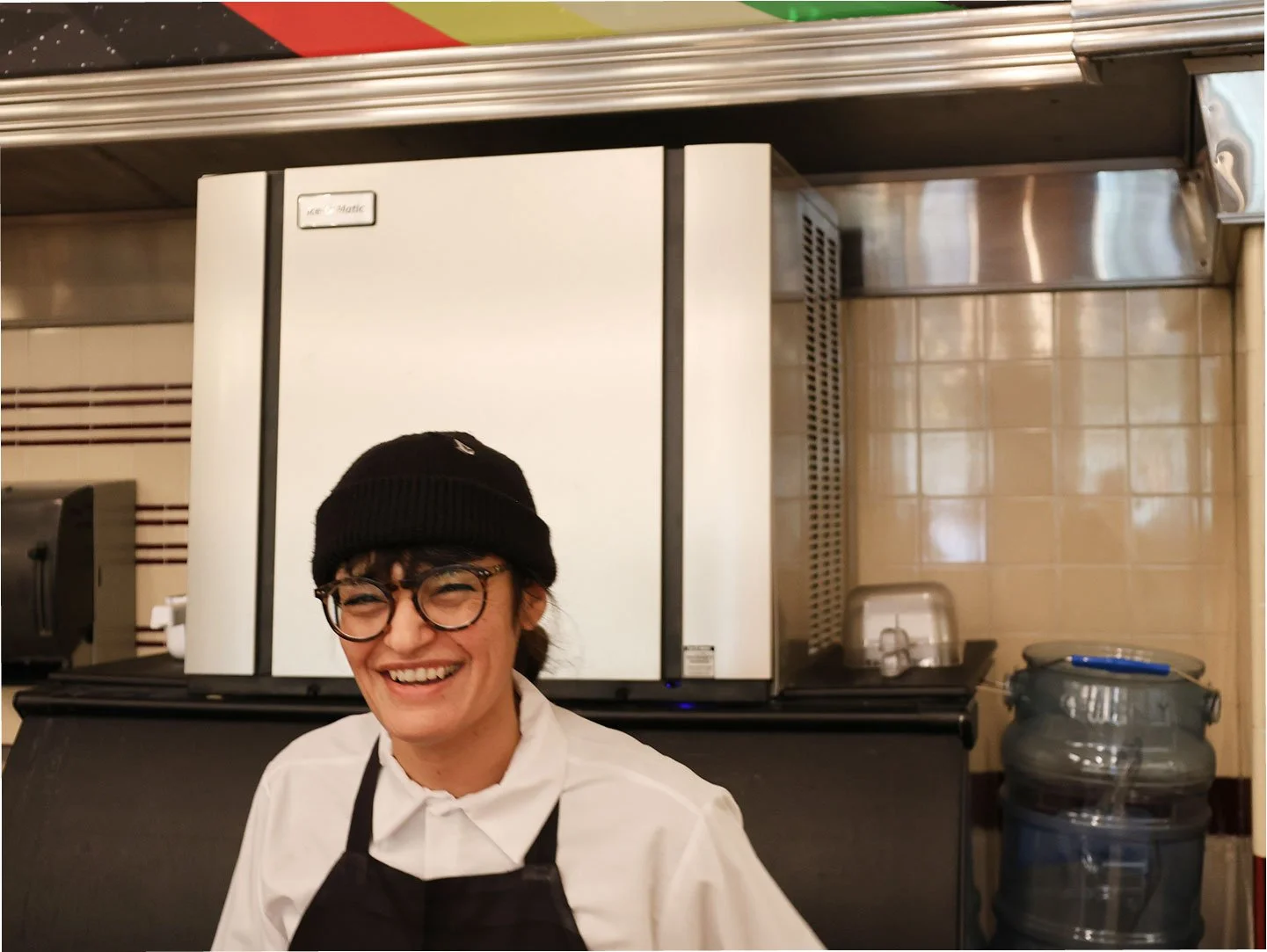
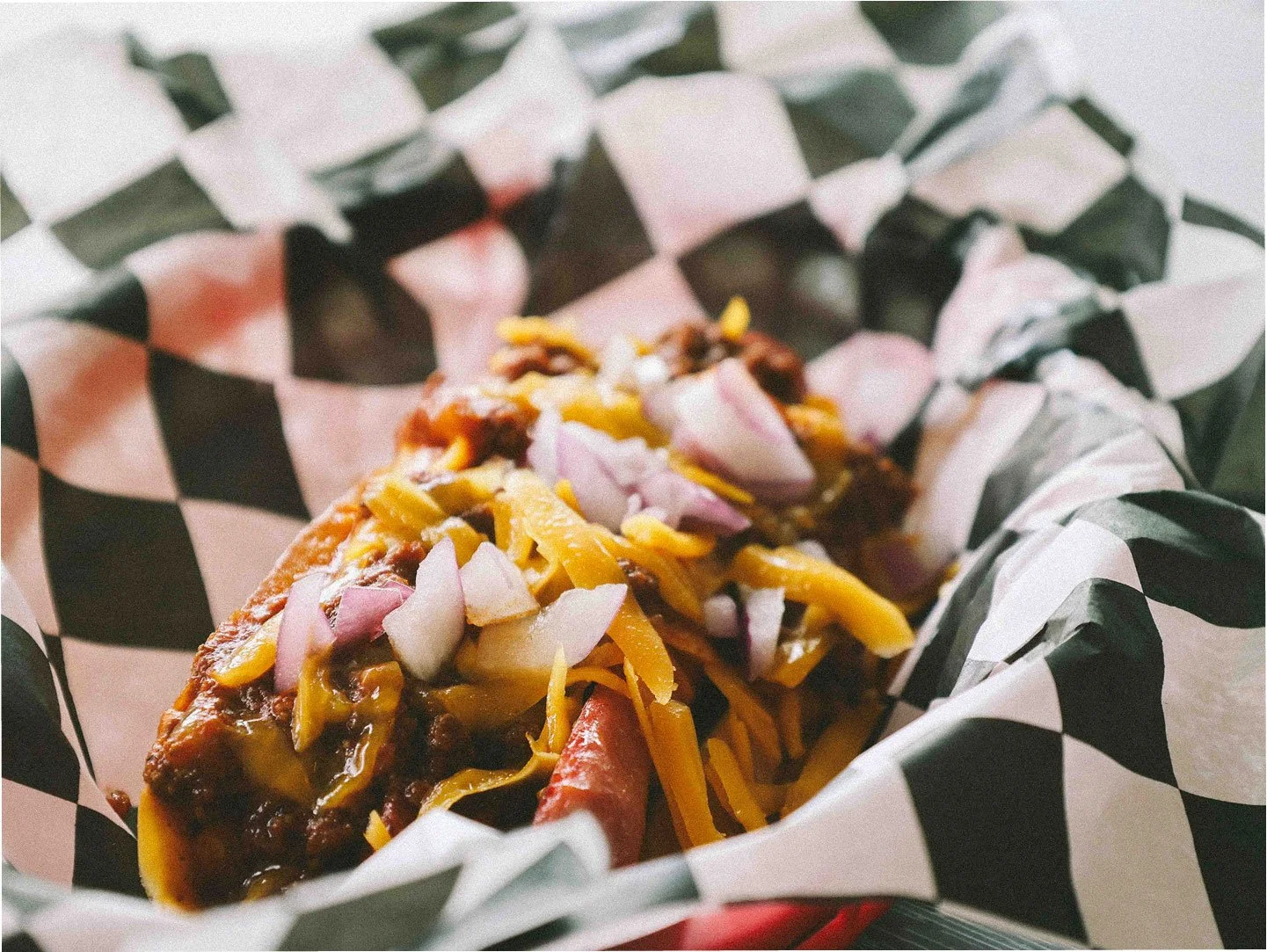
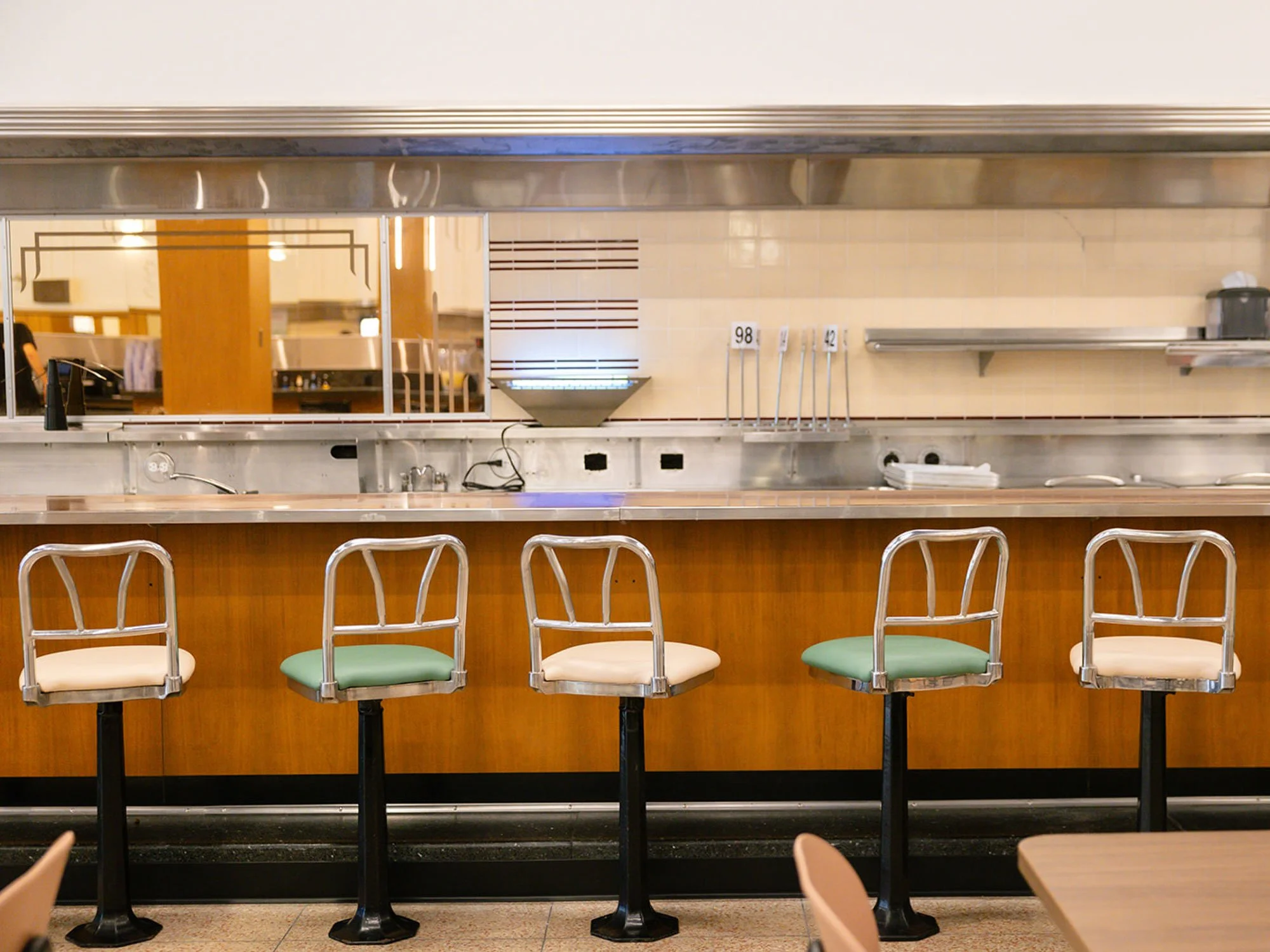
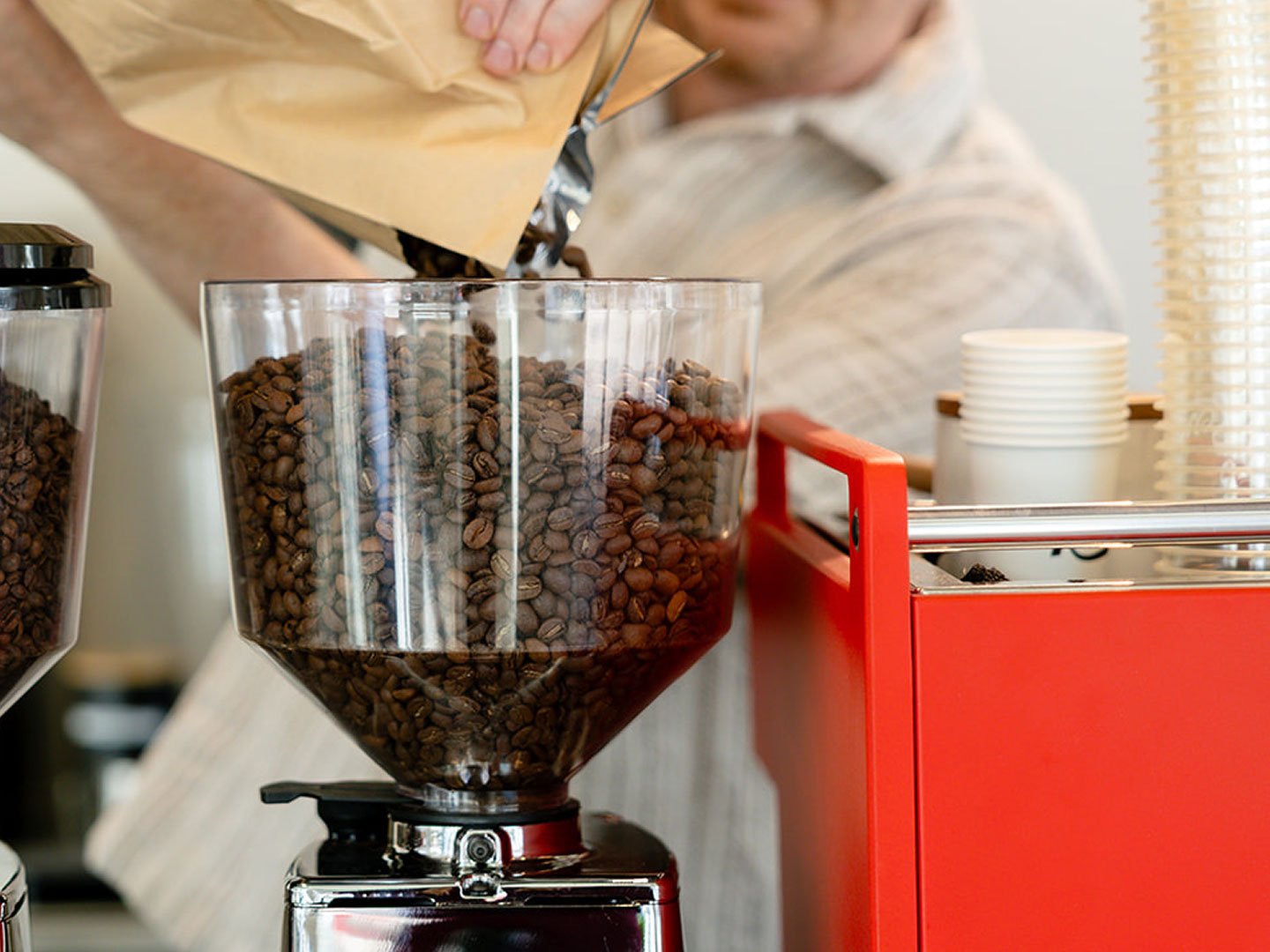
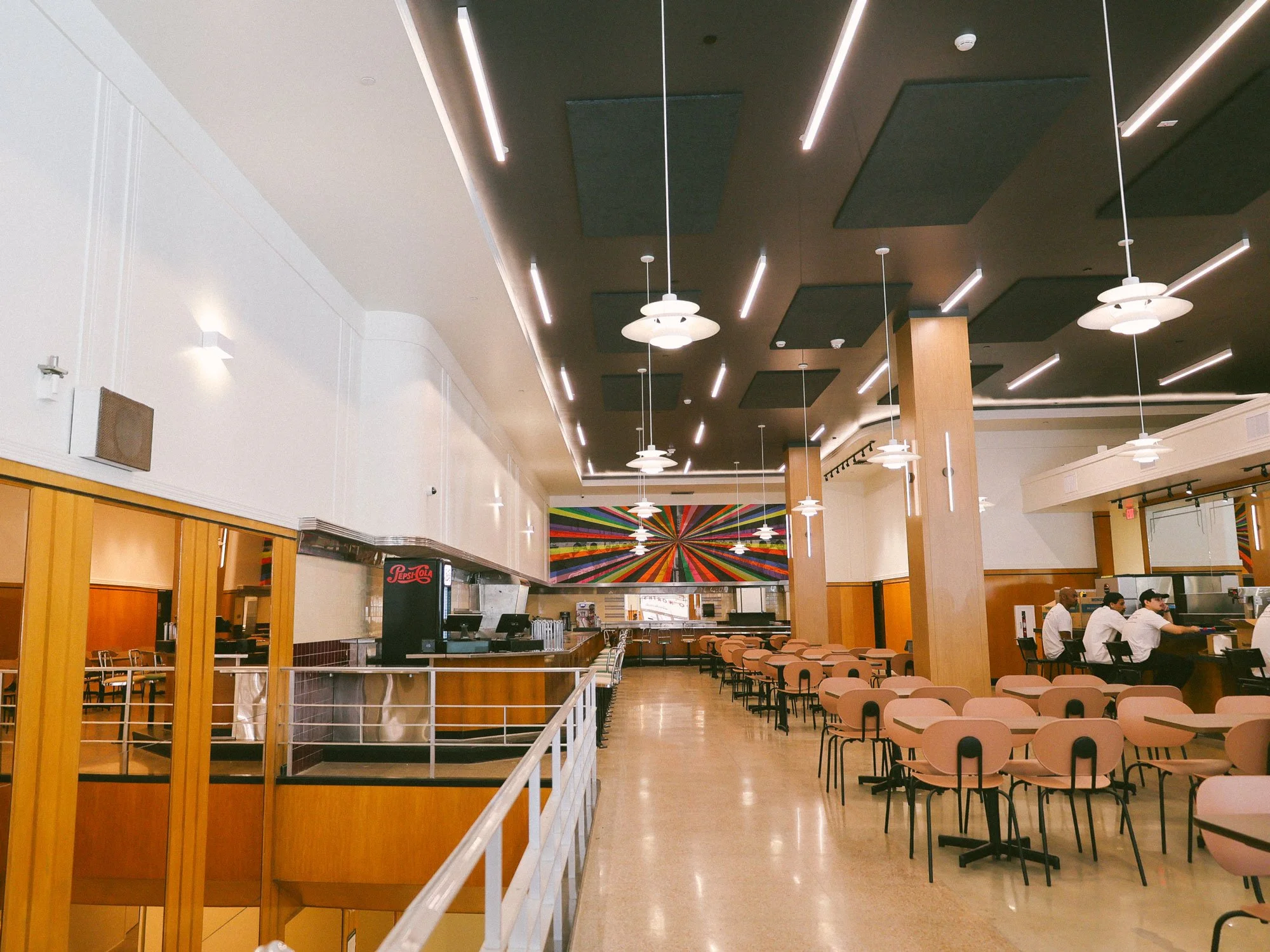
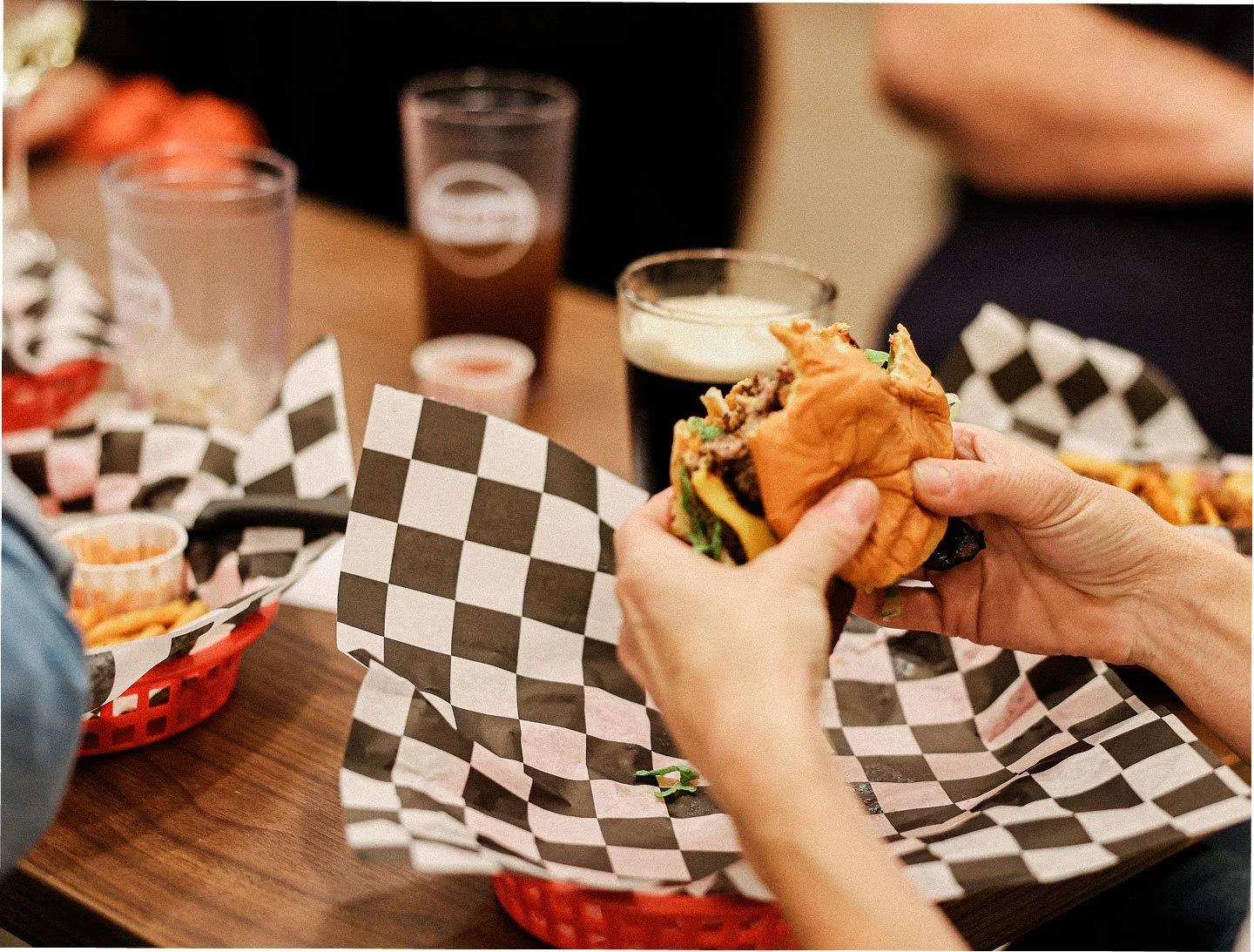
The Luncheonette operates as the anchor. It draws on the familiarity of the diner format while refining it through quality and detail. Reverb Coffee brings a daily ritual to the space — an independently established brand that we considered as part of the larger ecosystem when shaping the building's identity.
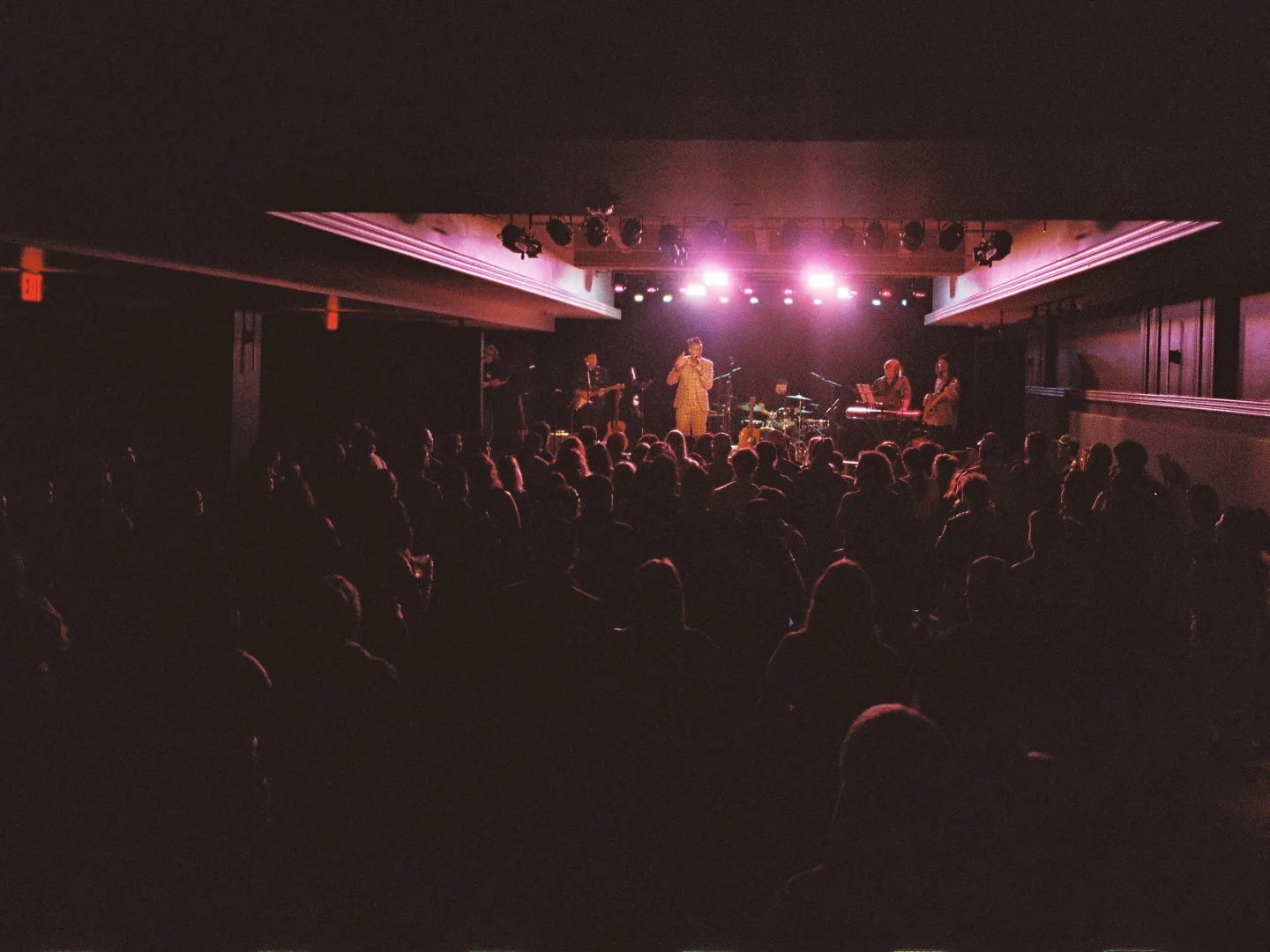
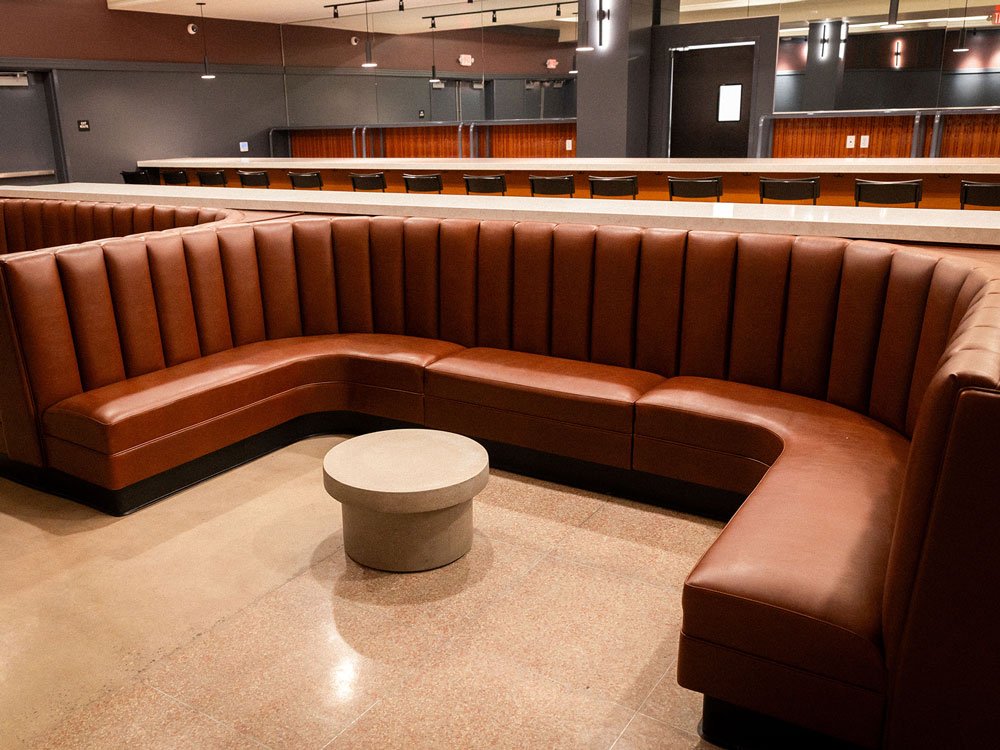
Below ground, The Basement serves as both a venue and a recording environment. It extends the building’s role beyond gathering into production, giving local artists a place to create and perform. The second floor is home to Moneywise Wealth Management, adding a steady professional presence within the mix.
Ownership plays a central role in how the building functions. Emily and Sherod Waite are longtime Bakersfield residents with deep involvement in the community through both cultural and professional channels. Their investment in the project reflects a broader belief in the city’s potential.
In practice, the building supports the community by creating usable space. It offers a place to meet, to work, to perform, and to spend time. That distinctive range of activity is what allows it to operate as more than a single-use destination.


Discovery
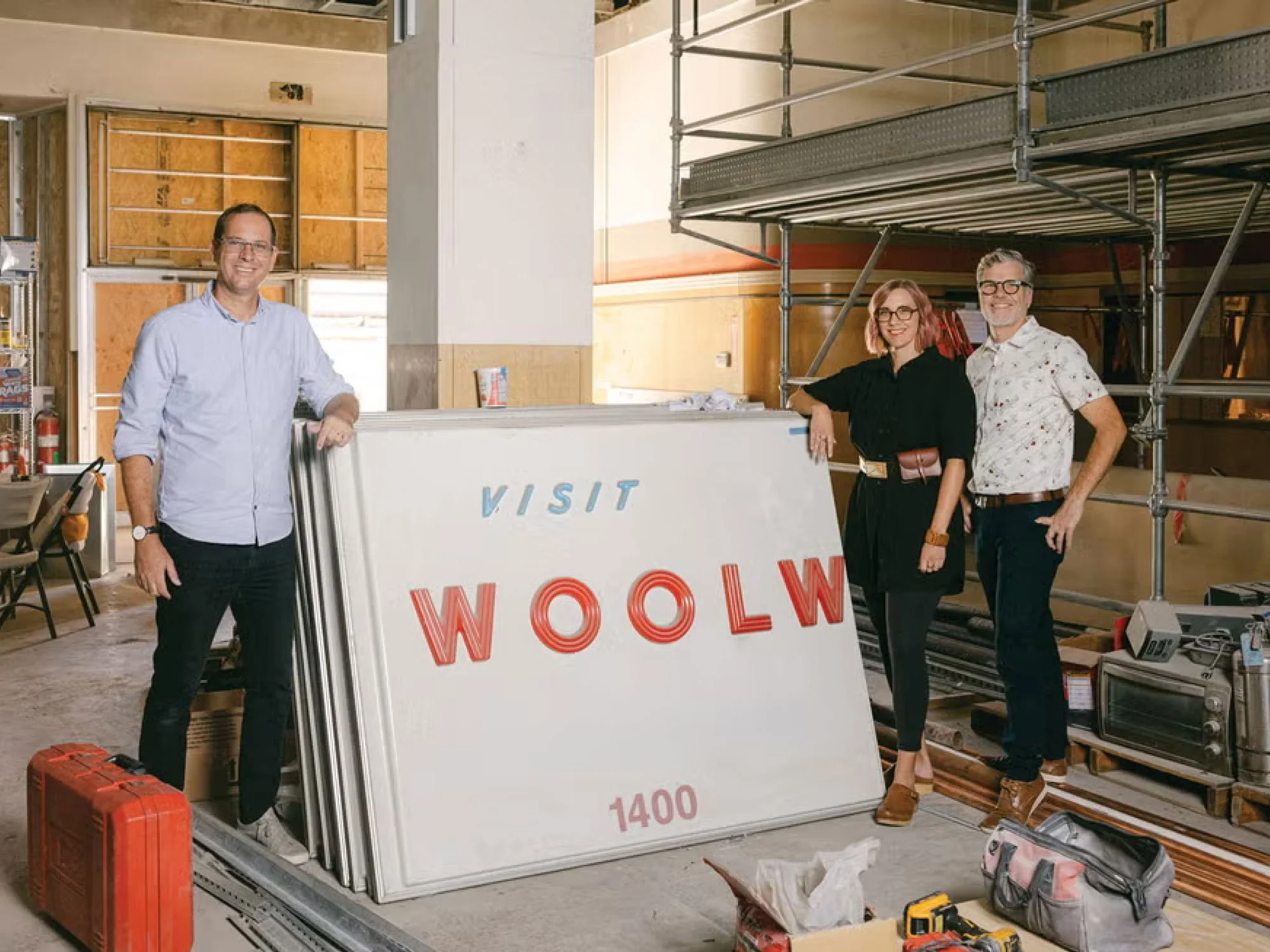
To build the brand this iconic space deserved, we had to understand the building from the inside out. That meant going beyond studying the archive, it was to become a student of the space.
It meant sitting with architect Dan Cater of Cater Design Group — understanding the structural decisions, the materials, the sight lines, the proportions that give the building its character and its weight. We went into the archive and pulled the actual history: the F.W. Woolworth Company's original brand language, the lunch counter's place in the civil rights movement, the way the building functioned in Bakersfield across different eras and different communities.
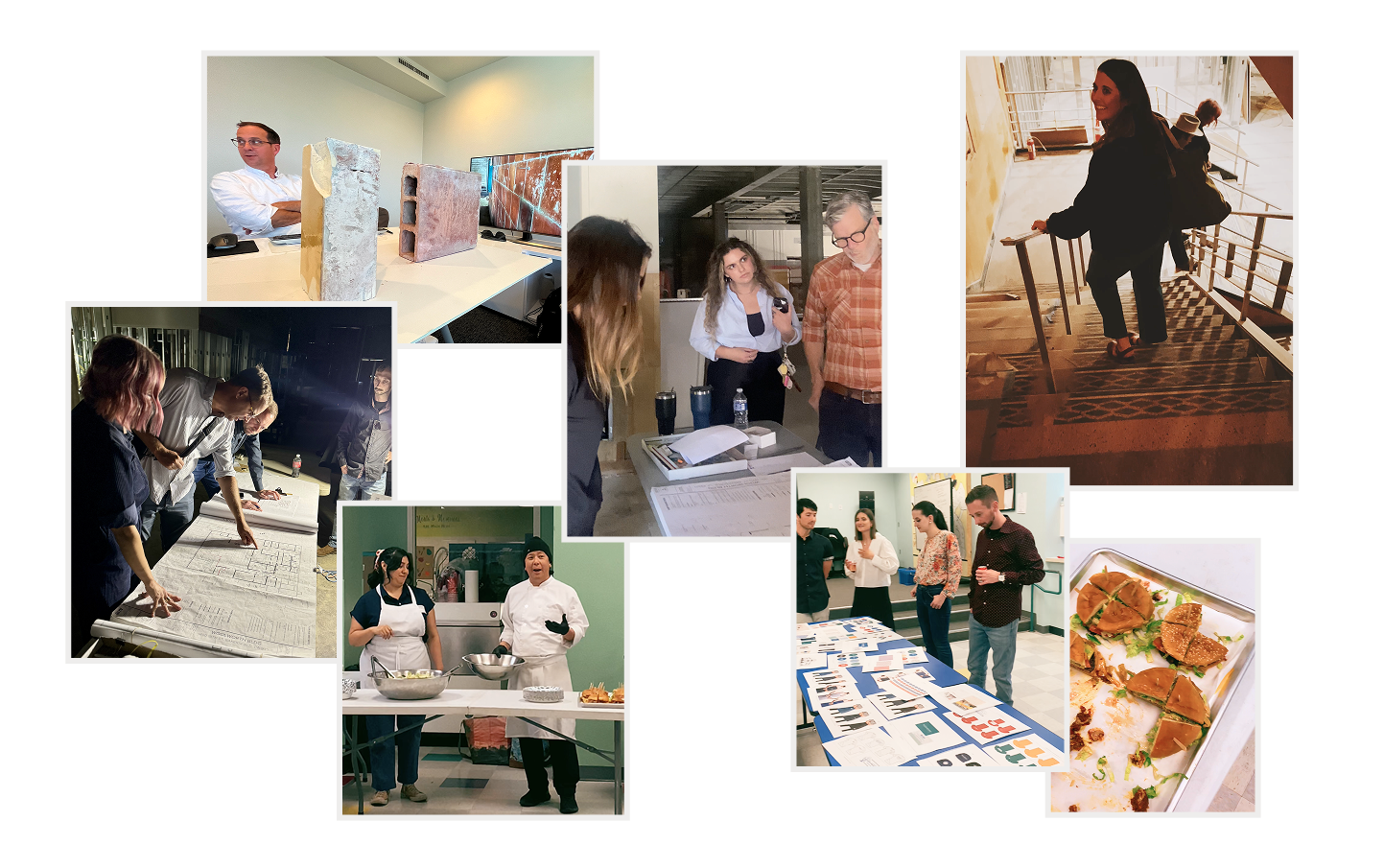
We spent time with Chef Richard Yoshimura understanding what he was building at the Luncheonette — the food philosophy, the sourcing, the experience he was designing for the person sitting at that counter. We brought years of firsthand work in downtown Bakersfield to the table, including a studied understanding of how this specific community finds its way into a new space, what makes them come back, and what makes a place earn its position in the hearts and minds of a city.
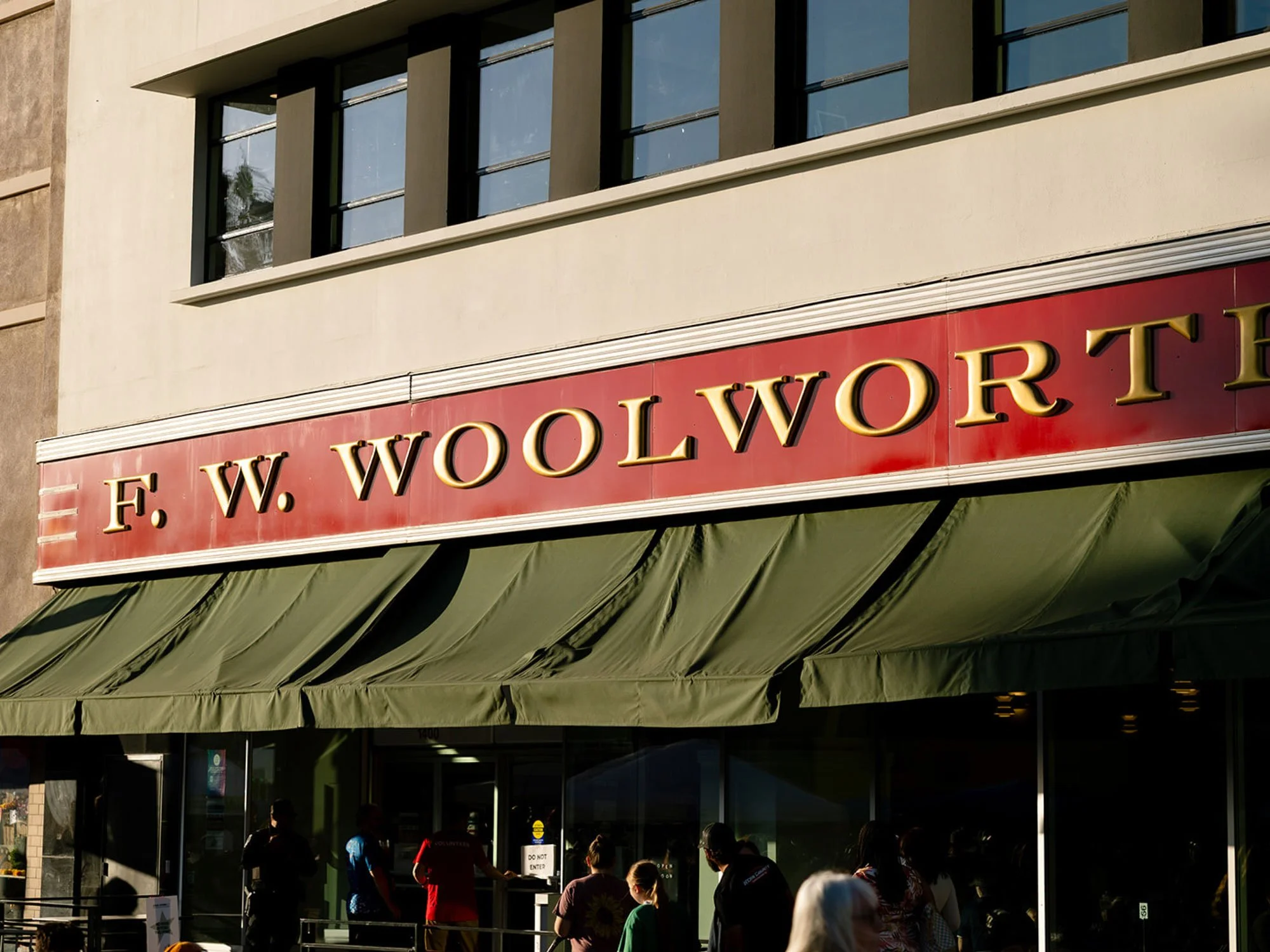
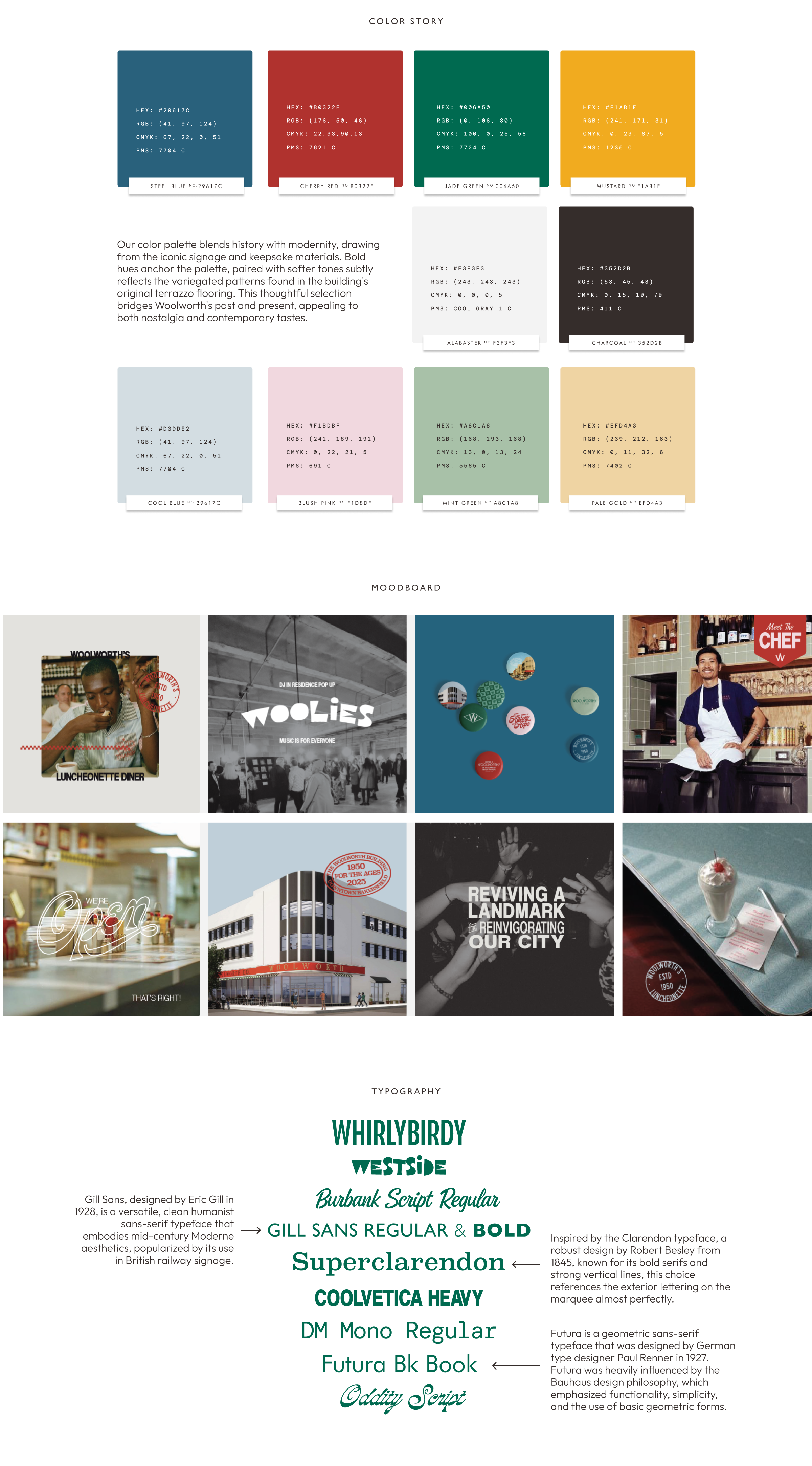
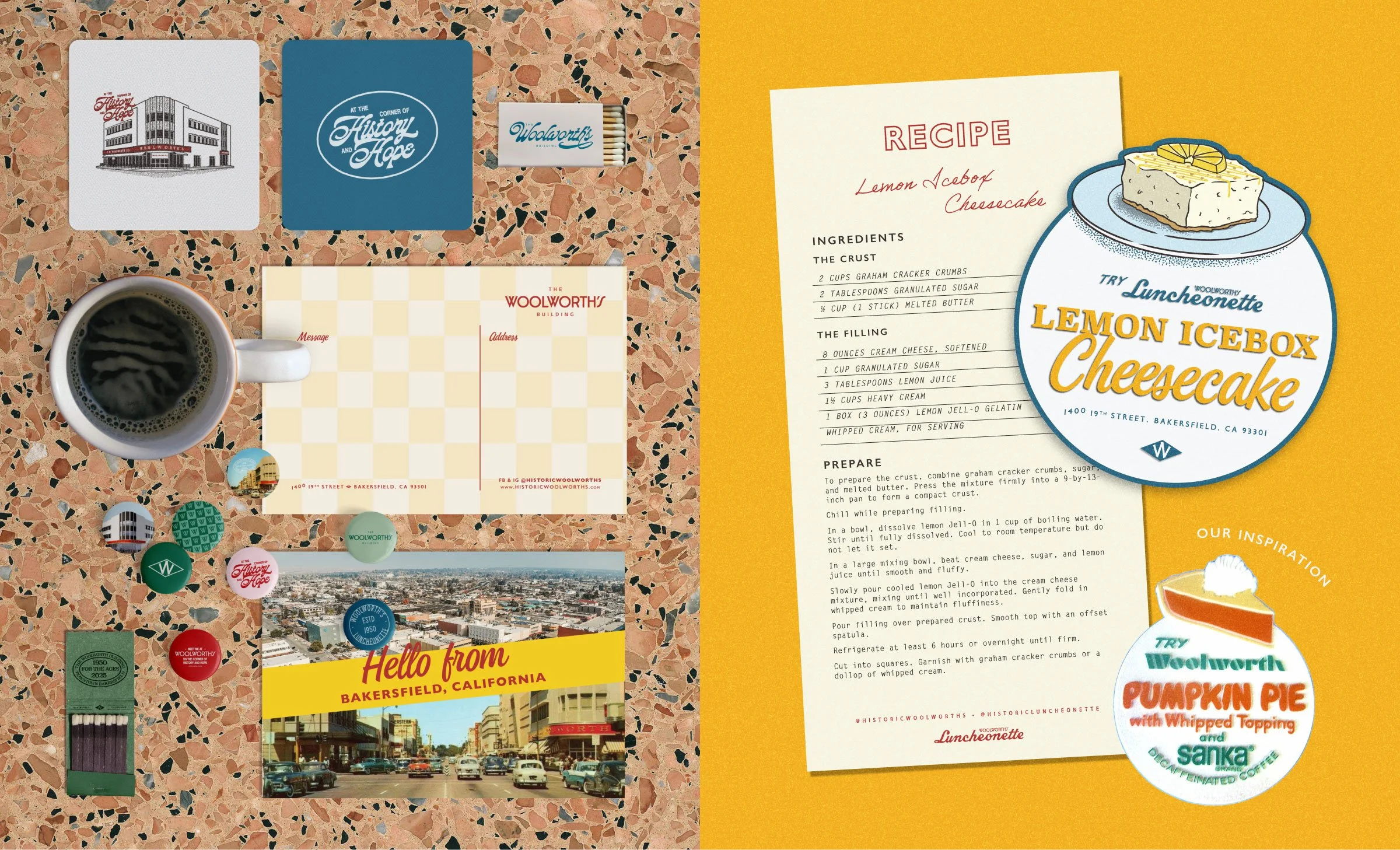
By the time we started building the visual system and writing the first line of copy, we had a clear picture of what the building was made of — literally and culturally. The typography came from the marquee and era-appropriate references. The color story came from the terrazzo, emboldened to give it flexibility. The messaging tone came from the people who built the place and the people who remembered it. What we built from those bones was curated and inspired. The history gave us the raw material and we shaped it into something with enough range to live on a wall, on a screen, on a shirt, and in the street in a way that the community can gather in and around.
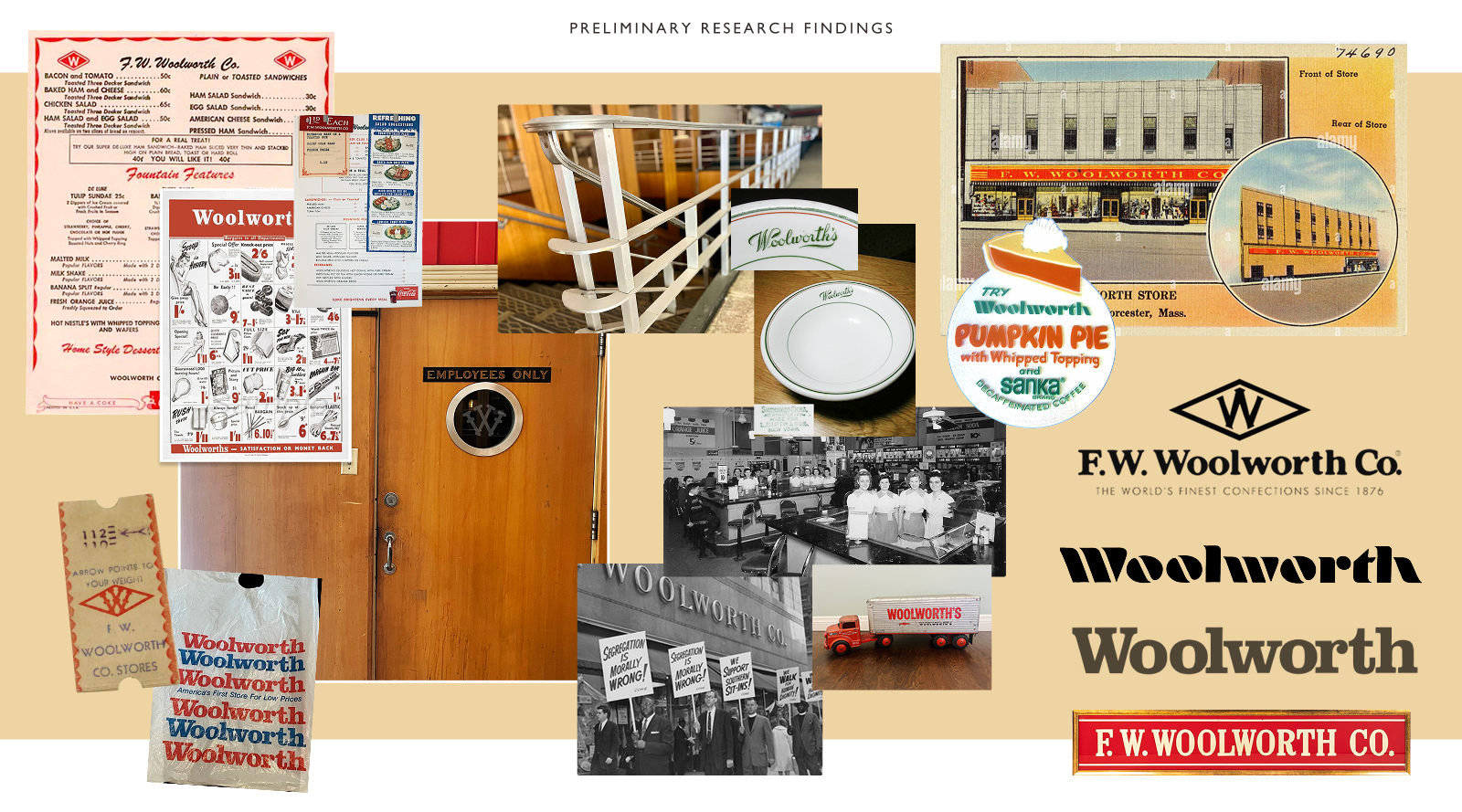
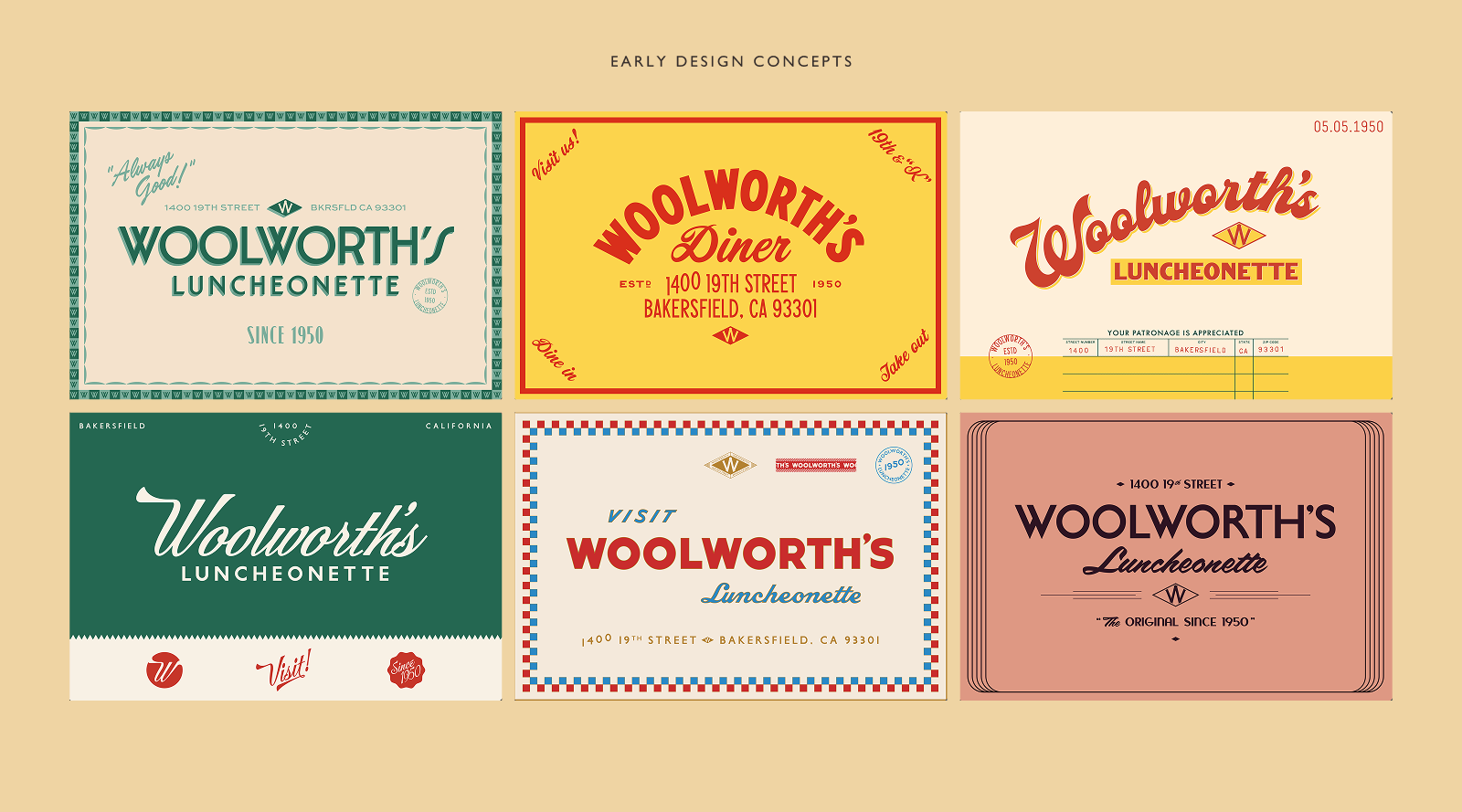
❋ PRELIMINARY BRAND DESIGN CONCEPTS by RYAN SANDERSStrategy + Messaging
The work centered on holding multiple timelines and memories at once.
For many residents familiar with Downtown Bakersfield, the building is tied to personal memory. Its earlier life as a Woolworth's store and later as a diner and thrift shop created a long chain of associations across generations. Those connections needed to be acknowledged and carried forward into what the building was becoming.
At the same time, the current iteration introduces new uses and new audiences. The brand needed to hold that expansion and maintain its continuity through it.
We developed a voice that reflects familiarity and stays rooted in the present. The tone is informed and grounded, with enough warmth to feel conversational. The aim was to make the building feel approachable while still respecting its significance.
Accessibility was a constant consideration. Historic designation can create distance if it is handled incorrectly. Our approach kept the focus on participation. The building is presented as a place to enter, to use, and to return to.
Audience strategy followed the same logic. The reach is broad, but the messaging adapts based on context. Different entry points exist for different groups, whether they are coming for coffee, music, dining, or work. The building accommodates all of them and holds its identity across every one.
The Visual Identities
The Building
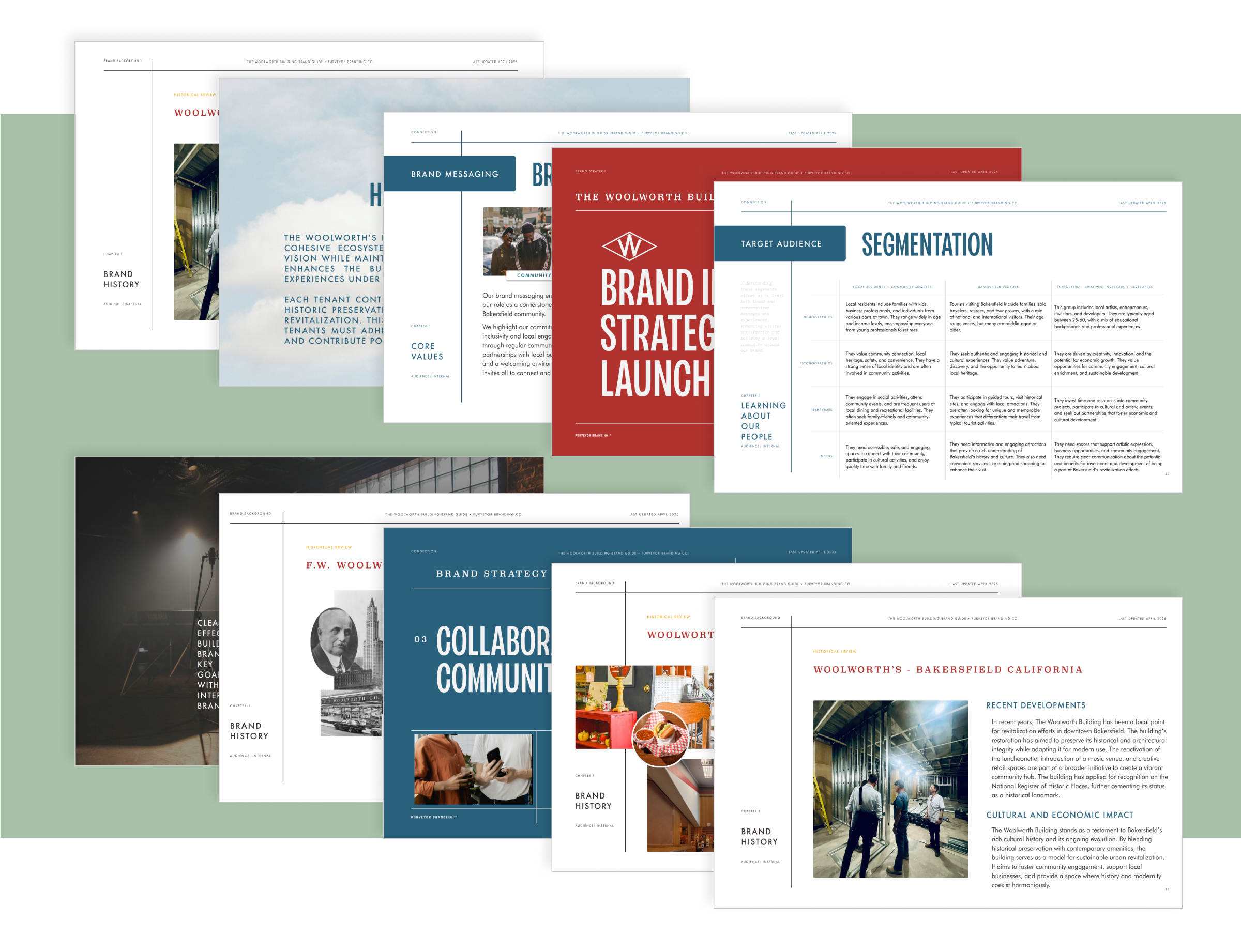
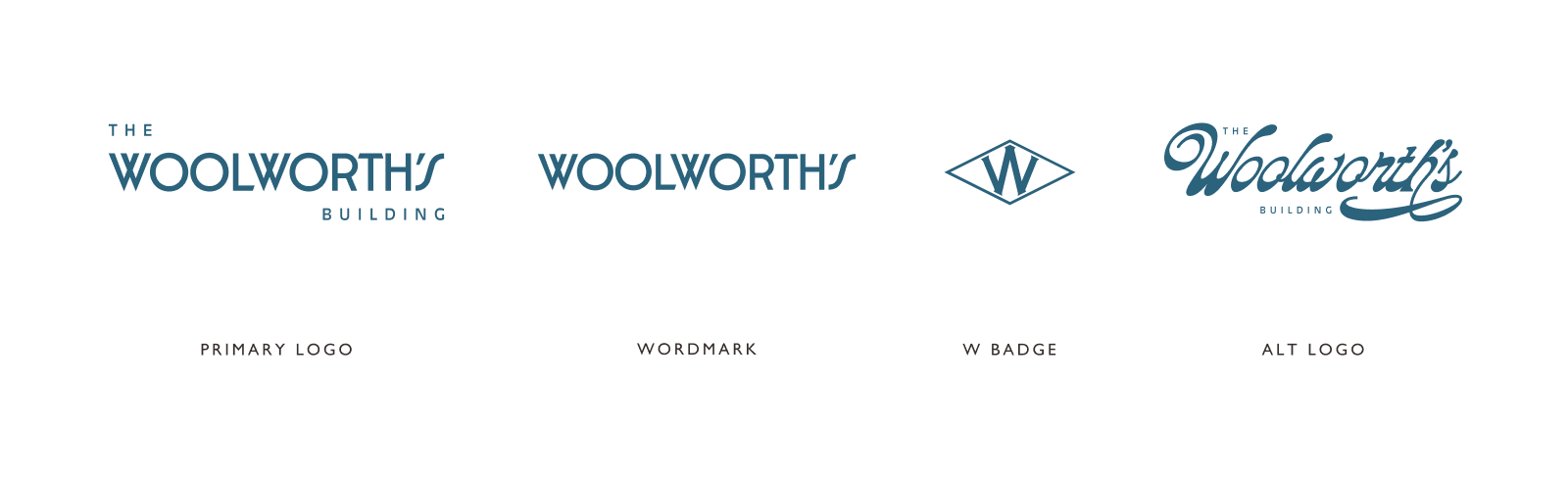
The core design solution came from this: three distinct spaces, each needing a real identity, all living under one roof that had its own identity to protect. Forcing everything to match or letting each space do its own thing both produce the same result. Either the building loses its coherence, or the individual spaces lose their character. We built a third option.
The visual system works as a family of brands. Each identity shares the same foundation in the building's material history, its architectural language, and its era-specific references, and expresses it through a distinct personality. The Luncheonette, The Basement, and the building itself are immediately recognizable as related, and immediately recognizable as their own.
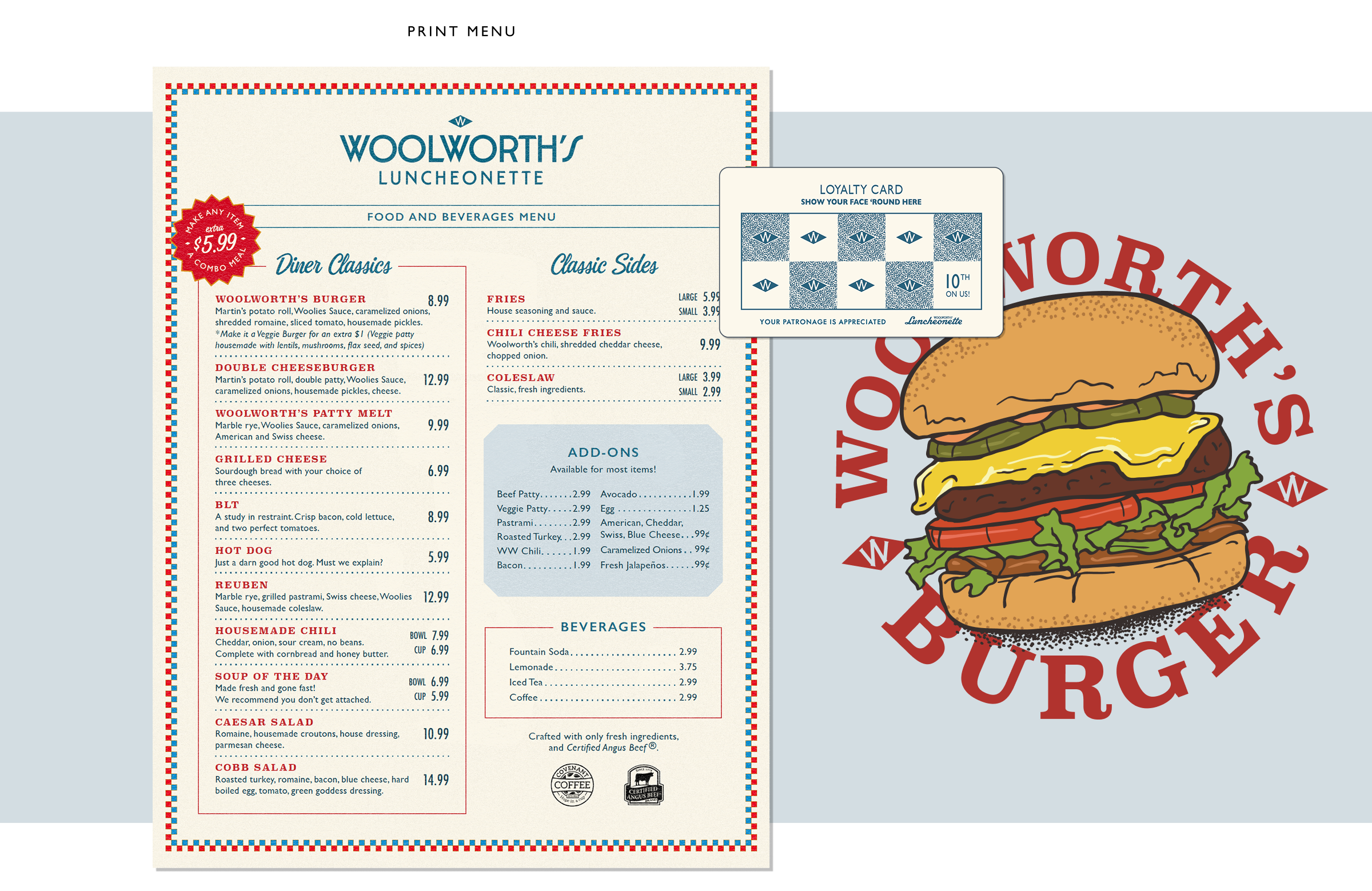
The Luncheonette
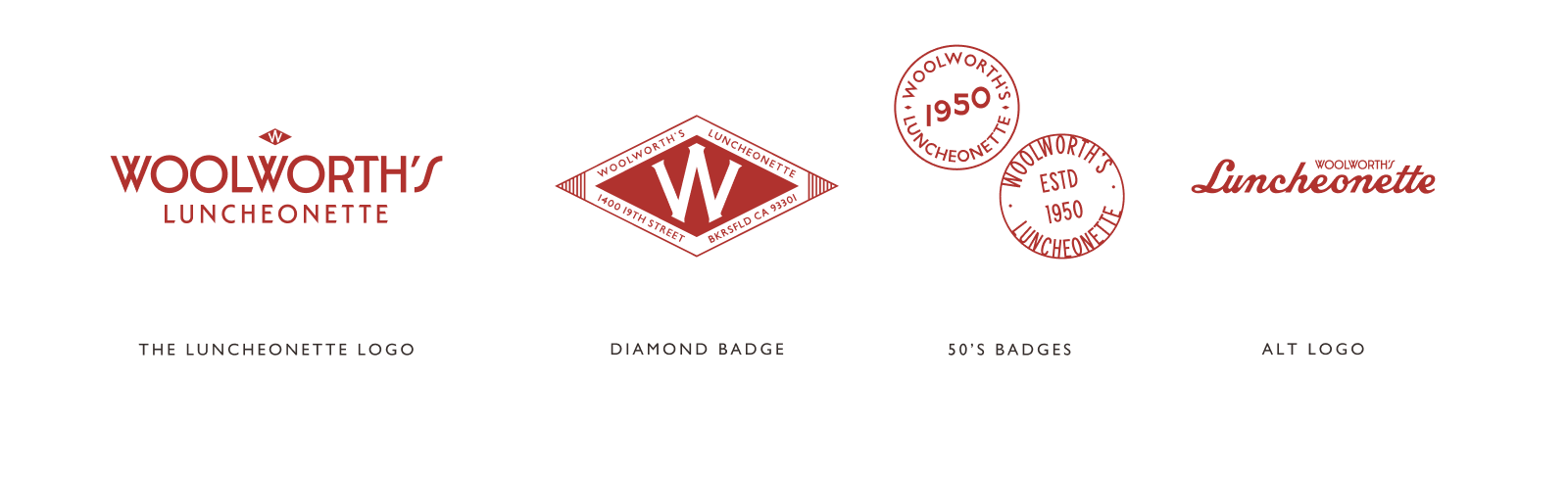
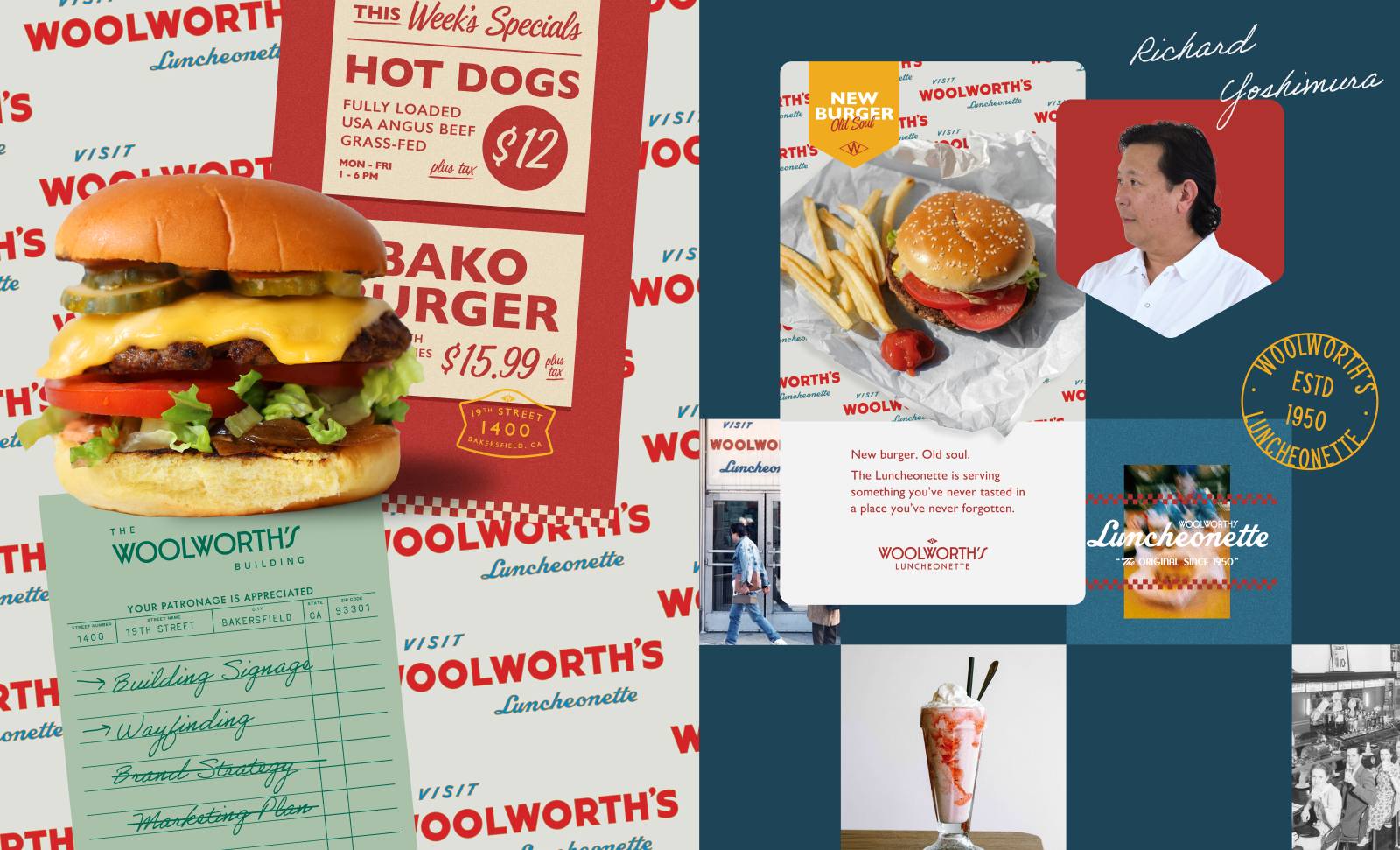
The Luncheonette identity leans into the kitsch of the era with intention. The proportions, color story, and badge system all draw from the period with specificity — sourced from actual Woolworth's materials and the visual language of the American diner at its peak. The system is built to scale, customize and have fun with for special campaigns. Clean enough to work across every format the space requires, from printed menus to window signage to social content, without losing coherence. It reads as familiar when you walk in and more considered the longer you look.
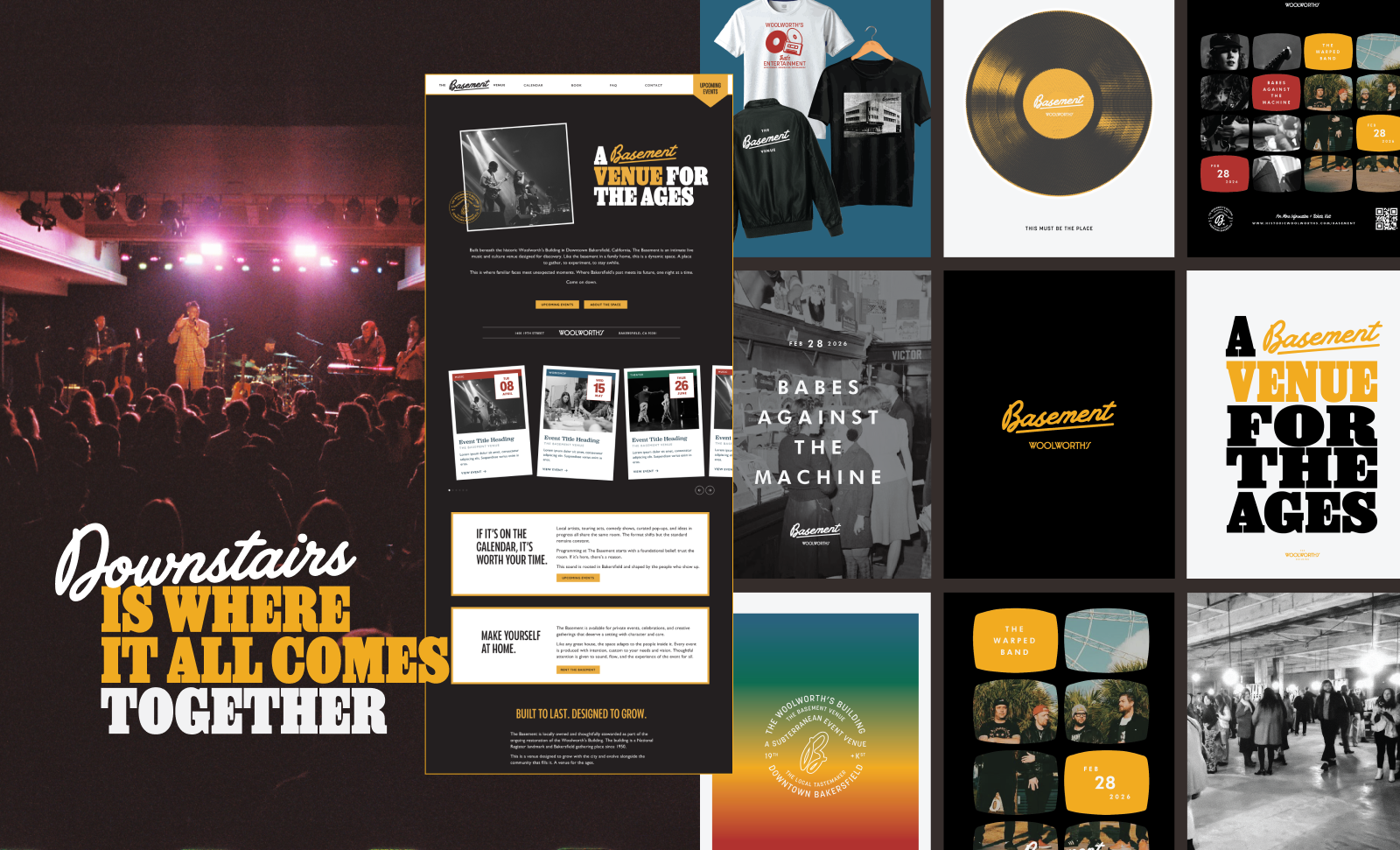
The Basement
Music has always been part of how we build brands. It's how we understand tone, energy, and atmosphere before anything becomes visual. That thinking shaped The Basement's identity directly.
The visual system is built around a modular grid derived from the historic Woolco sign, drawing from mid-century TV Guide programming, when entertainment was scheduled, anticipated, and trusted. That reference gave us a structure that flexes across a single act, a full lineup, or an ongoing calendar of events, and holds its brand integrity through all of it. The Basement operates in its own register within the larger family. Darker, more typographically driven, built around atmosphere. A venue brand that stands on its own and signals the tastemaker this space was built to be.
Website Strategy & Design
The website functions as an introduction to the building as a whole. It carries the visual language into a digital format while organizing the experiences around exploration. The strategic decision was to lead with the building and its unified story before opening into any individual space.
A visitor lands on the site and understands what the building is, what it stands for, and how it operates as a whole, before they ever click into the Luncheonette or The Basement. That sequence gives each space the context it needs to land correctly and protects the building's identity in the process.
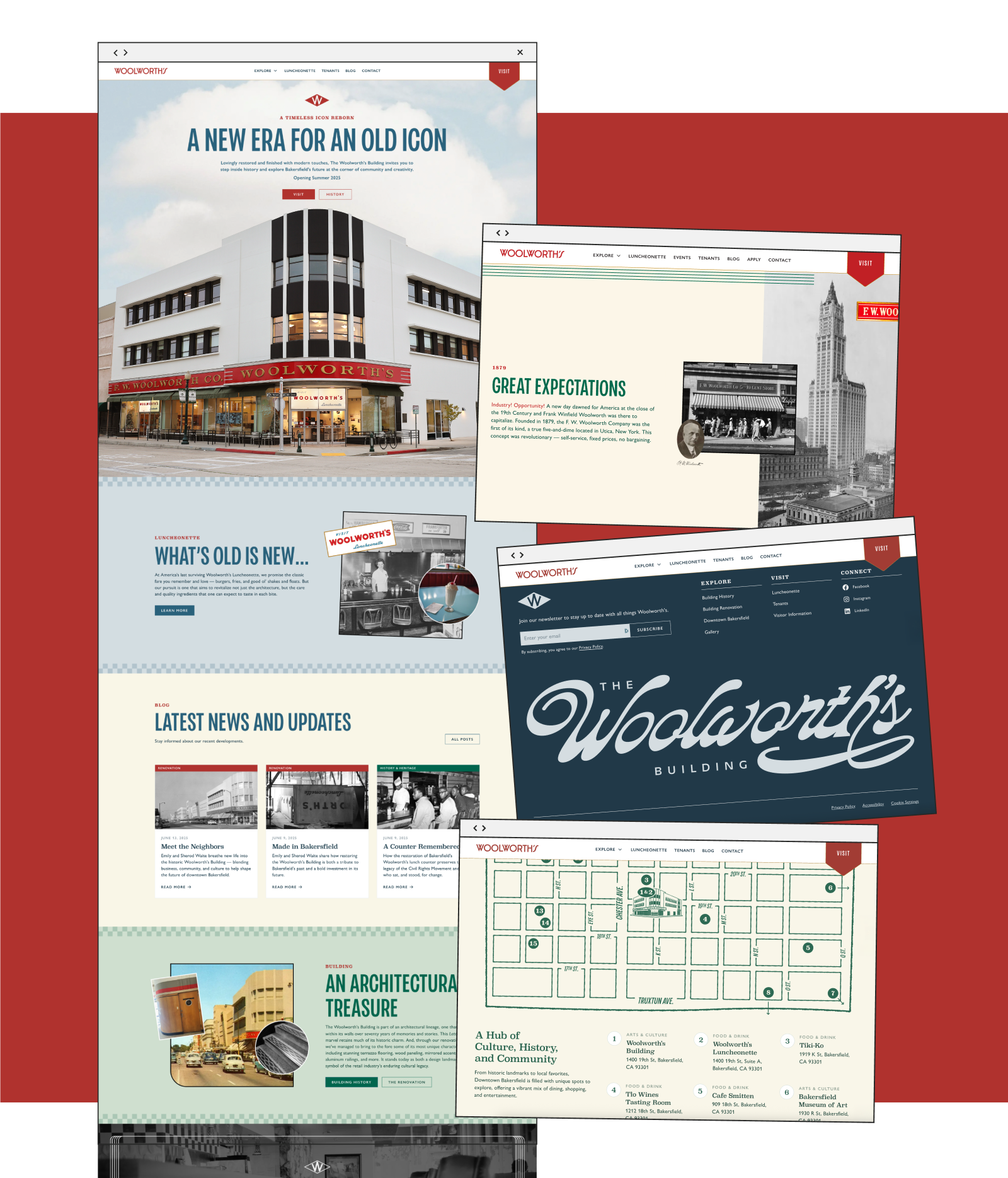
❋ website design + development with Sunnier studioBrand Management + Development
Some brand engagements end at delivery with a logo, a guide, a handshake. At Purveyor, the plan is the starting line. Implementation and constant development is where the work actually happens, and for a building like this one, that distinction mattered from day one.
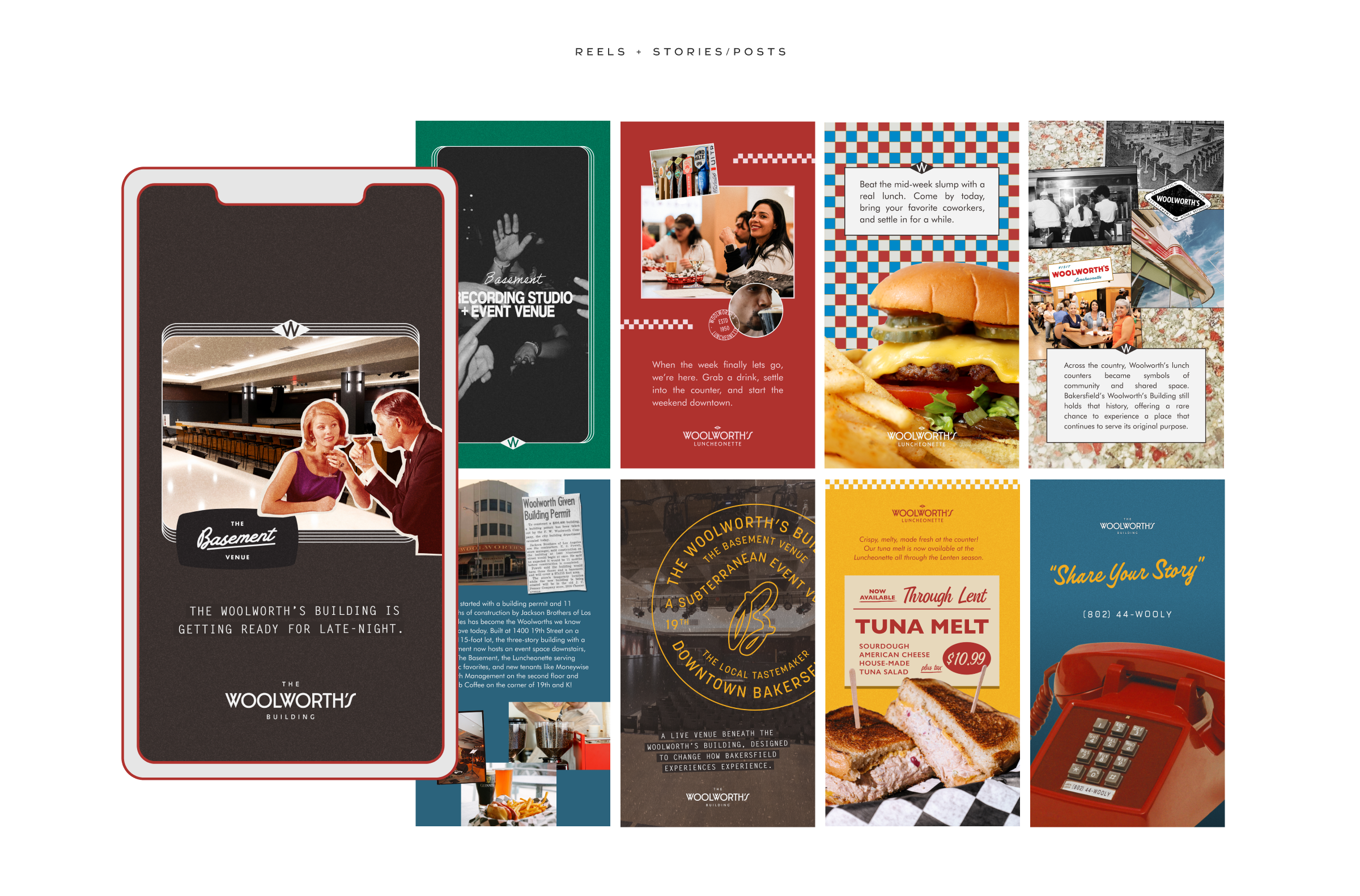
We coordinated directly with ownership and operators across the Luncheonette and the Basement, managing social content, event promotion, and day-to-day messaging while keeping every piece of output anchored to the same brand foundation. We trained Luncheonette staff on templates they could run themselves — daily specials, seasonal moments, community-facing content — so the brand lived at the counter level, not just at the campaign level. We built and owned a Master Calendar that coordinated all three entities and kept every activation from pulling in its own direction. We created a Brand Management HQ for each entity that covered everything a venue needs to operate with intention: brand foundation, audience strategy, content pillars, event frameworks, social cadence, street-level tactics, email, paid advertising, and partnership strategy.
For The Basement's first three shows, we executed a full four-phase event marketing framework — Announce, Build, Show Week, Post-Event — and built the promotional infrastructure to run it repeatedly: event asset kits, press releases, tactical content calendars, post-event recaps, and an archiving protocol so every show built on the last one.
The risk in a building like this is always fragmentation. Each entity has its own voice, its own audience, its own operator with their own priorities. Without a steady hand on the whole picture, the brand drifts. We kept that from happening by treating every piece of content, every event post, every daily special as part of the same argument: that this building is open, active, and worth your time.
As the Woolworth's Building builds out its internal team, they step into ownership of the physical space and the brand living inside it — with everything they need to carry it forward with confidence. A complete brand story. A design system built to scale across every entity and every format. An operational framework their team can run. A content infrastructure with the cadence, templates, and tools already in place. A pipeline of strategic initiatives researched, sequenced, and mapped to the specific rhythms of this city and this community.
Over two years of institutional knowledge, local relationships, and market-specific thinking is documented and organized across every handoff we made. The community knows the building. The brand has earned its place downtown. The systems are built for a team to own and grow without starting from scratch.
Impact
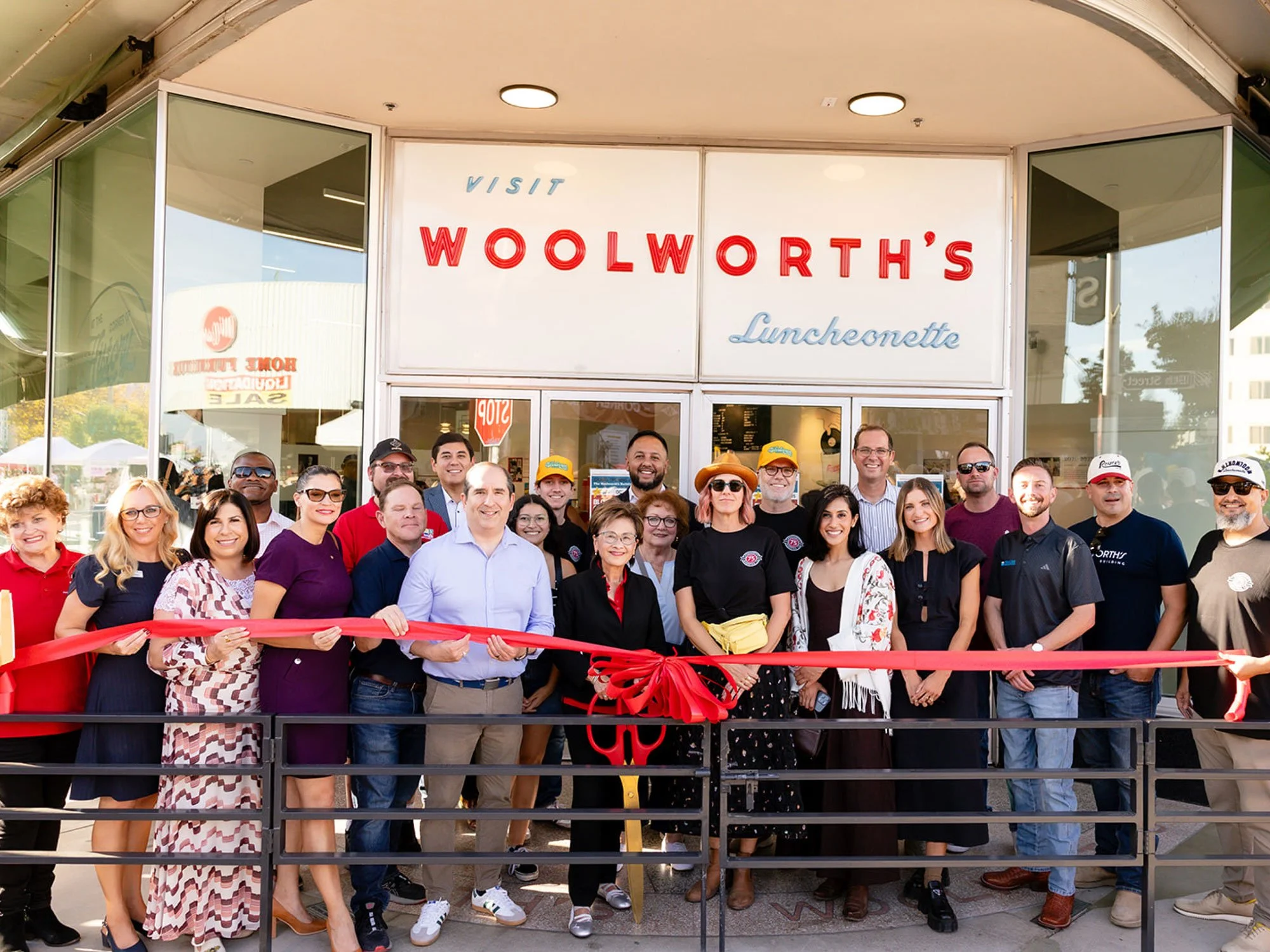
The Woolworth's Building has re-entered the daily life of downtown Bakersfield. The community knows it, uses it, and returns to it. The Luncheonette is drawing both returning visitors and first-time guests, building the kind of repeat traffic that turns a new space into a neighborhood anchor. Moneywise has fully integrated into the second floor, adding a professional presence that completes the building's mix of uses.
Below ground, The Basement has established itself as a venue worth following. A growing audience, a programming calendar that continues to build, and a reputation in the local music community that it earned show by show.
The next chapter is theirs to write. The brand is established, the systems are in place, and the community is already showing up. What gets built from here belongs to the team carrying it forward.
The tone, the visuals, and the operational structure gave the community a clear picture of what the building was and an open door to walk through. A National Historic Landmark, the last surviving Woolworth's lunch counter in the country, has re-entered the daily life of a city that already claimed it as its own. It carries its history forward and keeps making room for new ones.
We are honored to be a part of bringing this icon back to life in the way it deserved.